TIG welding rods explained: tungsten colors, filler rod and sizes
TIG welding rods are two different things: the tungsten electrode in the torch and the filler rod in your hand. Colors, sizes and which filler for which metal.

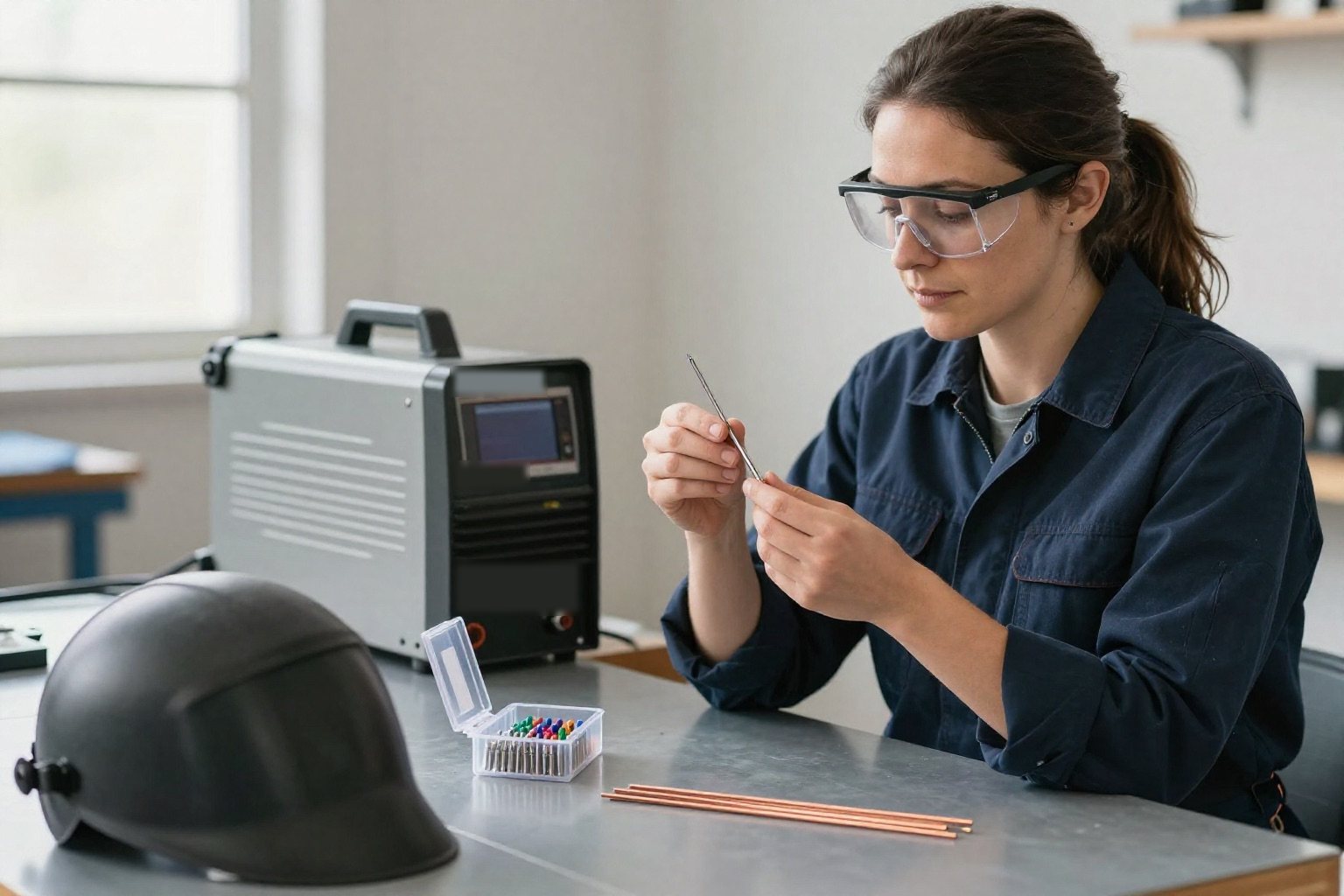
A TIG welder uses two different rods: the tungsten electrode in the torch, which carries the arc and shouldn't melt, and the filler rod you feed into the puddle by hand. The painted tip tells you the tungsten type; the filler follows the metal you weld.
TIG welding rods are two different things: the tungsten electrode that sits in the torch and makes the arc without melting, and the filler rod you feed by hand into the puddle, which becomes part of the weld. For most home work a 3/32 in 2% lanthanated (blue) tungsten covers steel, stainless and aluminum, and the filler follows the metal: ER70S-2 or ER70S-6 for mild steel, ER308L for 304 stainless, ER4043 for most aluminum. Below: what the tungsten colors mean, which size fits your torch, which filler for which metal, and what to buy on top of the machine.
Our rankings for this: best TIG welders, AC/DC TIG welders, TIG & stick welders and best TIG welders for beginners.
Affiliate disclosureAs an Amazon Associate we earn from qualifying purchases made through links on this page. Commissions never change our ratings.
Tungsten or filler: two rods, two jobs
Miller Electric describes TIG as a non-consumable tungsten electrode in a handheld torch that heats the metal, while argon protects the weld and filler metal is added with a separate rod. So when a listing or a forum says "TIG rod", ask which one. Tungsten gets reground and replaced now and then; filler rod is used up as fast as you weld. A stick electrode, the flux-coated rod for the electrode holder, is a third thing and never goes in a TIG torch.
| Rod | Where it goes | Does it melt? | What decides which one you buy |
|---|---|---|---|
| Tungsten electrode | In the torch, held by the collet | No, it should not | AC or DC, the metal, your collet size |
| TIG filler rod | In your free hand, dipped into the puddle | Yes, it becomes the weld | The base metal and its alloy |
| Stick electrode | In the electrode holder | Yes, with its flux coating | Stick welding only |
Thin edges and outside corners can be fused with no filler at all, which is why some TIG jobs only use the tungsten. Still choosing a process? Our MIG vs TIG vs stick guide puts the three side by side.
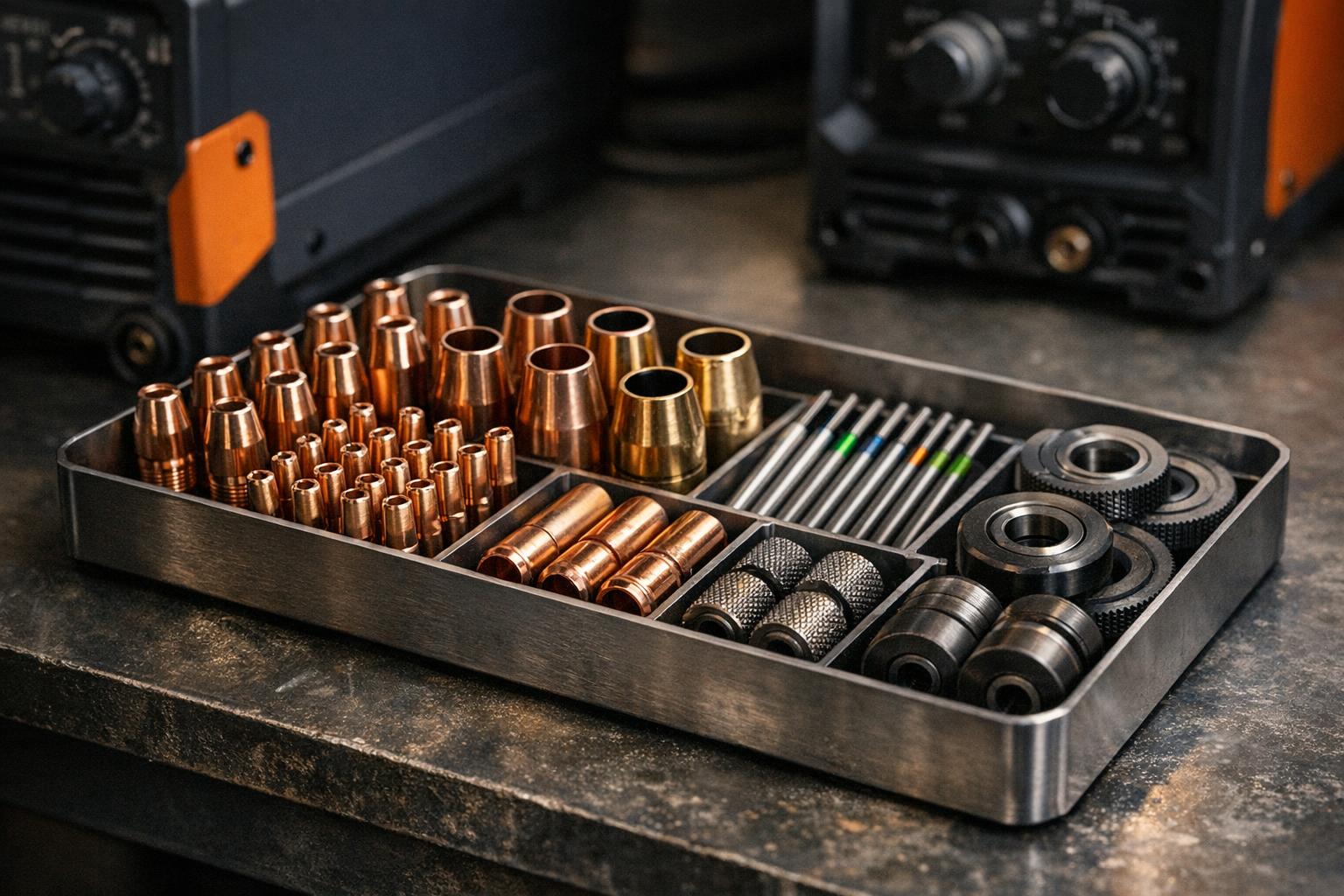
Tungsten colors: what the painted tip tells you
Every tungsten carries a colored band at one end that names its type. The US standard, AWS A5.12, has followed the international ISO 6848 since its 2009 edition, and that edition changed one color people still trip over: 2% ceriated went from orange to grey, so old stock can still show orange. The table uses the colors Miller gives in its tungsten guide.
| Color | Type | What Miller says it is good for |
|---|---|---|
| Blue | 2% lanthanated | A true all-purpose electrode: good starts, high current without spitting, works on all metals |
| Grey (orange on older stock) | 2% ceriated | Low and medium current, good starts and restarts, all metals; worth it if you often weld at low amps |
| Chartreuse | Rare earth blend | Very good low-current starts, all metals |
| Red | 2% thoriated | The old DC standard; thorium is slightly radioactive |
| Green | Pure tungsten | AC on aluminum with old transformer machines |
| White | Zirconiated | Aluminum and magnesium, better arc stability than pure |
"Rare earth" or "tri-mix" packs fall under the EWG class, and AWS lets the maker choose any color not already in use, so read the class printed on the pack rather than the paint. Other lanthanated grades (1% and 1.5%) are sold too, under their own colors. Red still welds fine on DC, but the grinding dust is the issue with thorium, and on a modern inverter you lose very little by going blue or grey instead.
Which tungsten for steel, stainless and aluminum
Mild steel and stainless are DC work, electrode negative, with a pointed tungsten. Blue or grey both work. For thin sheet Miller prefers ceriated, with thoriated as the second option, and a smaller diameter, because it starts easier and focuses the arc at low heat.
Aluminum needs AC, and here your machine matters. Pure tungsten balled at the end was the rule on transformer machines. Miller's AC tungsten guide is clear that on today's inverter AC/DC welders pure tungsten is no longer the recommended option: ceriated or lanthanated electrodes do better, and you can prepare them the way you would for steel. The manual of your exact welder has the final word.
Lift TIG, the start you get on most multiprocess welders and DC stick inverters, is DC only: steel and stainless yes, aluminum no. You touch the tungsten to the work and lift it, which dulls and sometimes contaminates the tip while you learn, so keep a few sharpened spares within reach. High-frequency start skips the touch, and the Weldpro 200A AC/DC Pulse TIG Welder listing says its HF start reduces tungsten wear. Our TIG and stick welders ranking covers the lift TIG machines; for aluminum, the AC/DC TIG welders list only takes machines that state AC output.
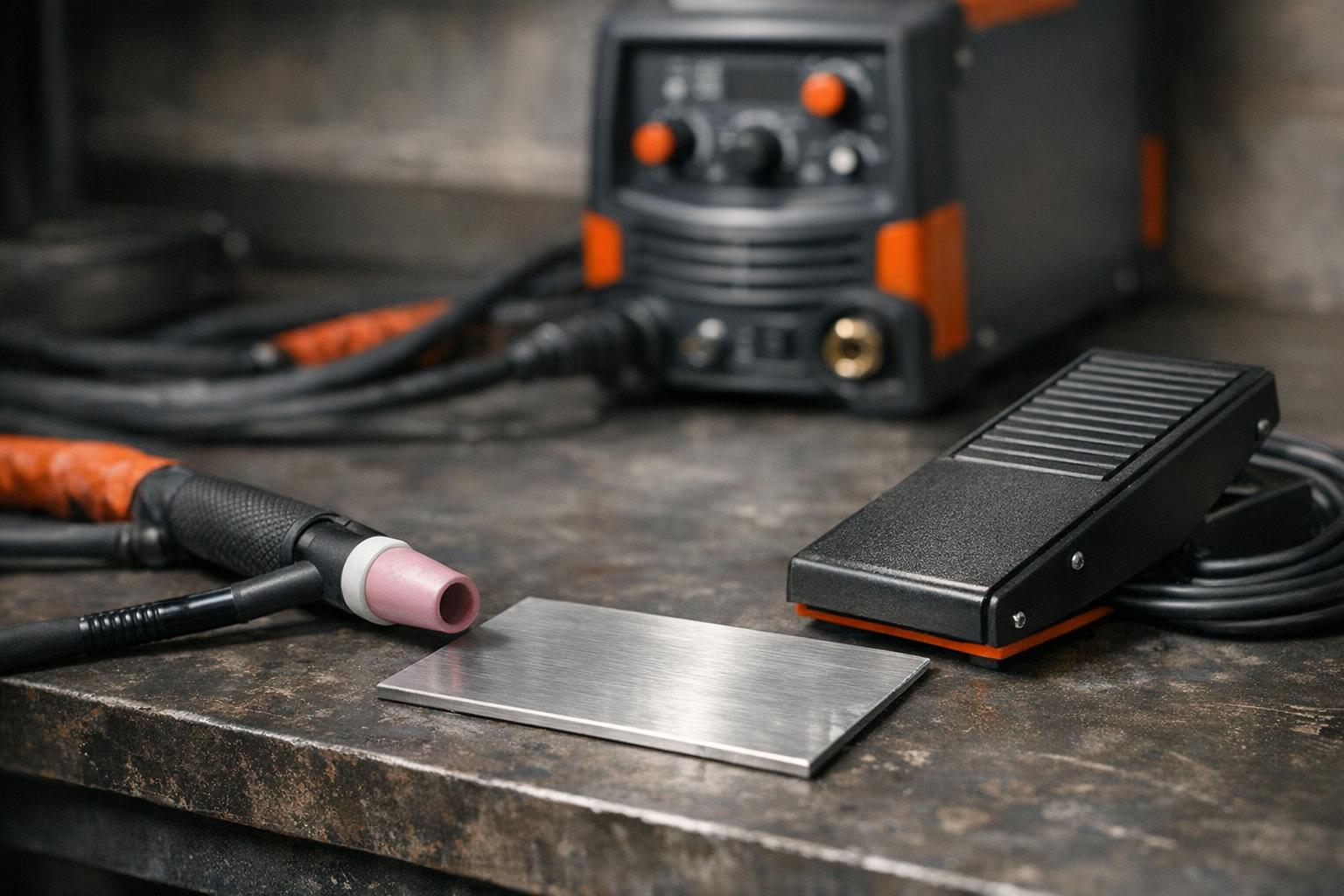
Tungsten size, collets and grinding
Miller lists diameters from.020 in up to 1/4 in and a standard length of 7 in. Use a larger diameter for higher amperage and a smaller one for easy starts at very low amperage. For most general work Miller calls 3/32 in (2.4 mm) the versatile choice: it handles light sheet and still welds 1/4 in steel or more. On thin sheet,.040 in and 1/16 in (1.6 mm) are popular.
- Collet and collet body must match the tungsten diameter, and they follow the torch series. Find your torch series in the listing or manual before ordering parts.
- Cut it, do not snap it. Miller recommends an abrasive cutoff wheel; breaking tungsten with pliers or by bending can leave micro-cracks and an erratic arc.
- Grind along the length. Scratches should run parallel to the electrode, on a wheel used only for tungsten. A sharp point gives a wide puddle for thin edges, a blunter one deeper penetration.
- Contamination happens when the tip touches the puddle or the filler rod touches the hot tungsten. Regrind before you carry on.
What some of the TIG machines we rate say about the torch, according to their listings: the PUWU 205A 6-in-1 AC/DC TIG Welder names a 3 m WP-17 torch, the AZZUNO 200A 6-in-1 AC/DC TIG a WP-26 torch, the Eastwood TIG 220 AC/DC a WP-17F flex-head torch with a gas lens kit and foot pedal, and the ANDELI 8-in-1 AC/DC TIG Welder 200A adds ten tungstens and ten collets. The ARCCAPTAIN 165A 4-in-1 MIG Welder offers lift TIG, but its listing says the WP-17V torch is sold separately. Our consumables guide shows how to build a parts list from the manual.
Filler rod: match the metal, not the machine
Filler is the easy part: it follows the metal you weld. TIG rods are bare, straight lengths, and good ones carry their class stamped on every rod.
| Base metal | Filler | Why |
|---|---|---|
| Mild steel | ER70S-2 or ER70S-6 | Miller names ER70S-2 as a common TIG choice for steel; ER70S-6 is the usual MIG wire class and also comes as rod |
| 304 stainless | ER308 or ER308L | Compatible with 304 (Miller) |
| 316L stainless | ER316L | Miller: 316L needs a 316L filler |
| Aluminum, most home jobs | ER4043 | Easiest to weld: Miller says it burns slower and its silicon helps puddle control |
| Aluminum, strength or corrosion | ER5356 | Stronger and more corrosion resistant, melts faster (Miller) |
Hobart Brothers adds that 4043 and 5356 between them cover more than 85 percent of aluminum weldments, and that the right one depends on the base alloy, service temperature, anodizing and strength. Size the rod to the job: Miller's rule on sheet is a filler thinner than the base metal, or as close as possible, so you do not overheat the part before the rod melts. 1/16 in and 3/32 in cover most garage work. MIG wire straightened off a spool will do for a tack, but proper rod is cheap enough that it is not worth the fight. More on 4043 versus 5356 in our aluminum MIG guide.
What to budget on top of the TIG welder
- A pack of 3/32 in 2% lanthanated (blue) or ceriated (grey) tungsten, plus a few 1/16 in for thin work.
- Collets, collet bodies and cups in those sizes for your torch series.
- Filler rod for each metal you weld, in small tubes first.
- A grinder or wheel used for tungsten only.
- An argon cylinder and a regulator or flowmeter: Miller notes argon works for all TIG applications, so one gas covers steel, stainless and aluminum.
Some kits save you the first order. The Weldpro 200A AC/DC Pulse TIG Welder (9.4/10) lists tungsten electrodes, ceramic nozzles, collets and back caps in its accessory kit, plus a foot pedal, and the ANDELI 8-in-1 AC/DC TIG Welder 200A (7.3/10) ships ten tungstens and ten collets. Others stop at the machine and a torch, which is fine if you know it before comparing prices. Our best TIG welders ranking reads the package line of every machine, and the TIG welders for beginners list spells out the catch of each first machine. Grinding dust deserves the same respect as the arc: eye protection and ventilation, as in our safety and PPE guide.
Our rated picks
The three best-rated models of our best TIG welders ranking, from the buyer review record and the listed specs.
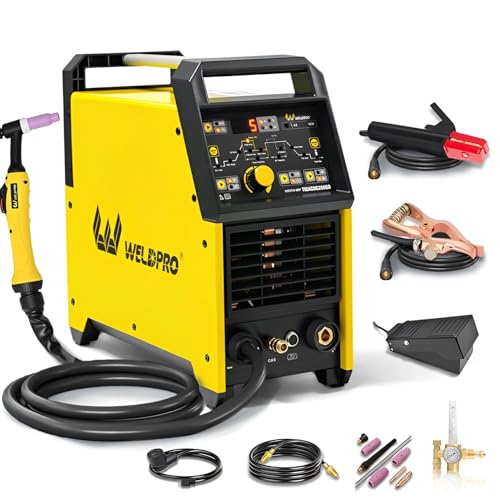


Product images: Amazon listings
Frequently asked questions
What is the best all-round tungsten for TIG welding?
Miller suggests starting with a 3/32 in 2% lanthanated (blue) tungsten when in doubt: it works on all metals, AC and DC, with good starts and high current capacity.
What color tungsten is used for aluminum?
On inverter AC/DC welders, Miller recommends ceriated (grey) or lanthanated (blue) tungsten rather than pure. Pure (green) and zirconiated (white) belong to older transformer machines.
What filler rod do I use to TIG weld mild steel?
ER70S-2 is a common TIG choice for steel, according to Miller, and ER70S-6 also works. Pick a diameter close to or a little thinner than the metal.
Can you TIG weld without filler rod?
Yes, on thin edges and outside corners that can be fused together. Most brackets, frames and butt joints with a gap need filler.
Sources
- Miller Electric — All About Tungsten in TIG Welding: Types, Selection and Use (consulted Nov 2026)
- Miller Electric — How to Choose the Best Tungsten for AC TIG Welding (consulted Nov 2026)
- American Welding Society — AWS A5.12M/A5.12:2009, Specification for Tungsten and Oxide Dispersed Tungsten Electrodes (preview, PDF) (consulted Nov 2026)
- Miller Electric — Successfully Welding Sheet Metal with MIG and TIG (consulted Nov 2026)
- Miller Electric — Guide to TIG Welding Basics (consulted Nov 2026)
- Miller Electric — MIG Aluminum DIY: Selecting the Right Welder, Spool Gun and Filler Wire (consulted Nov 2026)
- Hobart Brothers — Guidelines for Selecting the Most Appropriate Filler Metal (4043/4943 or 5356) (consulted Nov 2026)