Can you weld aluminum with a MIG welder?
Can you weld aluminum with a MIG welder? Yes, with a spool gun, pure argon and aluminum wire. What Miller says about input power, filler wire and prep.

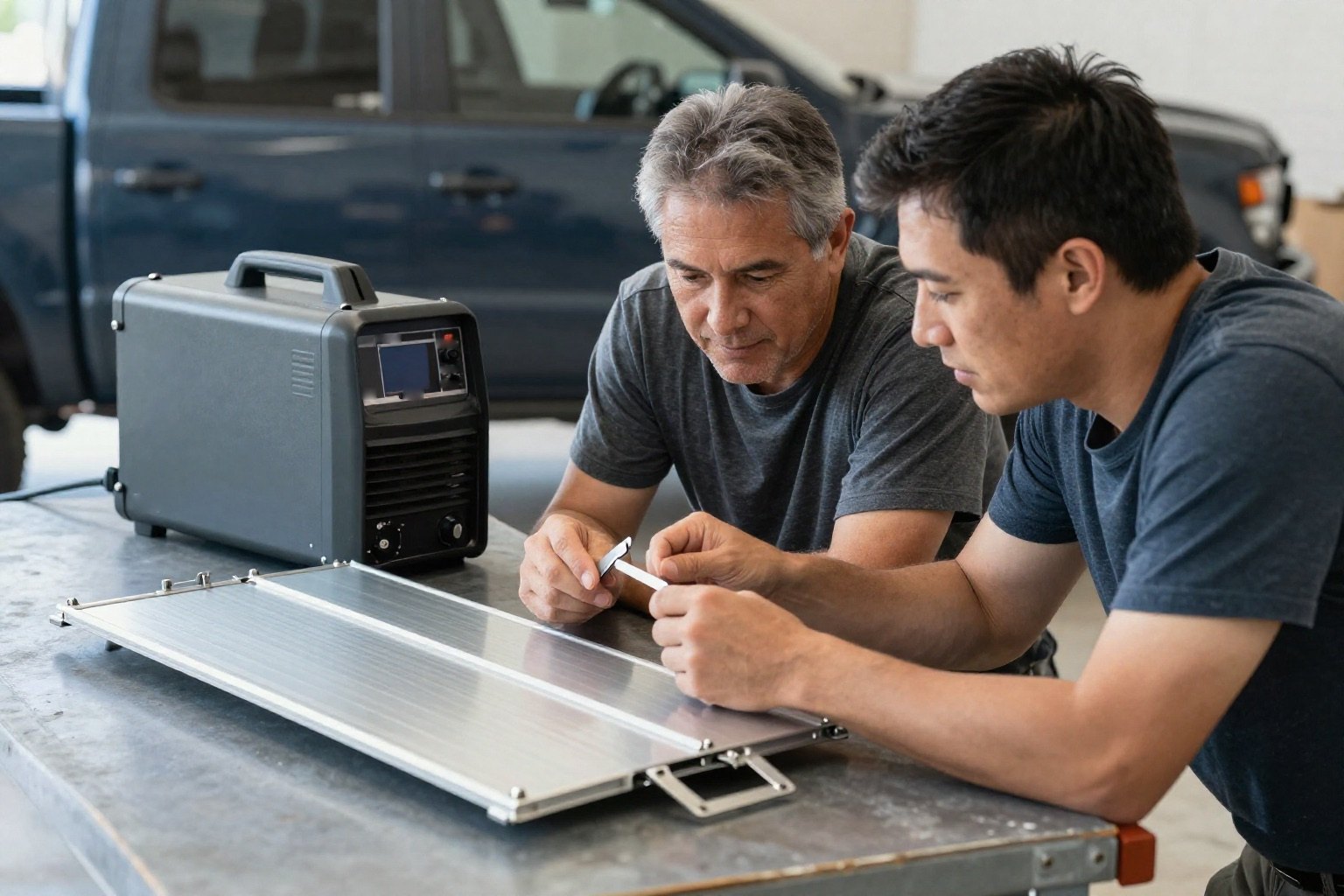
Yes, you can weld aluminum with a MIG welder, but only with the right setup: a machine that supports a spool gun, 100 % argon instead of the argon/CO2 mix used for steel, and aluminum wire such as 4043 or 5356. Miller also recommends a 230 V capable welder, because most 115 V machines lack the energy to fuse aluminum properly. Without those pieces an AC TIG welder is the better route. Here is the full checklist, with the numbers.
Our rankings for this: AC/DC TIG welders and best multiprocess welders.
Affiliate disclosureAs an Amazon Associate we earn from qualifying purchases made through links on this page. Commissions never change our ratings.
Why aluminum is harder to MIG weld than steel
Two things make aluminum awkward. It conducts heat away from the joint very quickly, and it is covered by an oxide skin that has to be broken before the metal underneath fuses. Miller Electric says this takes a lot of energy, which is why it recommends a welder that can run on 230 V for aluminum and warns that 115 V machines generally lead to poor fusion.
The wire is the other problem. Aluminum wire is soft, and pushing it 10 to 15 feet through a standard MIG gun liner tends to end in a "bird's nest" of tangled wire at the drive rolls. That is the reason for the spool gun.
Spool gun, gas and power: what the machine must support
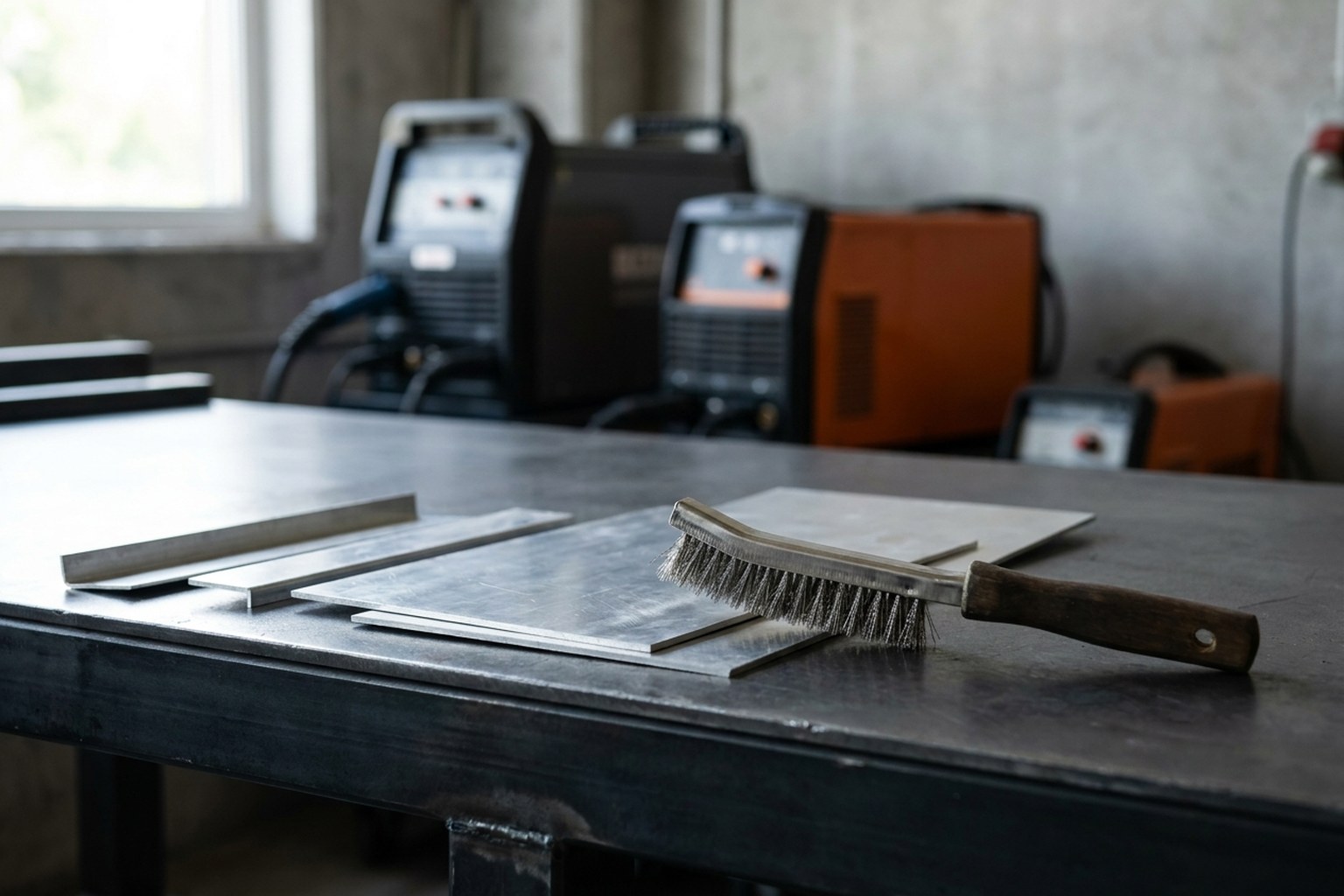
- A spool gun. It carries a small 1 lb, 4 inch spool on the gun itself, so the wire only travels a few inches (Miller). The welder must have a spool gun connection; the gun is often sold separately, so read the package line.
- 100 % argon. Miller's Ron Covell is clear: pure argon is required for aluminum MIG, not the argon/CO2 (C25) mix used for steel. The same regulator or flowmeter works for both.
- Input power. Plan on the 240 V side of a dual-voltage machine; see our 110V vs 220V guide.
- Duty cycle of the gun. Spool guns have their own ratings. Miller's smallest is rated 135 A at 30 %, its larger ones 150-160 A at 60 %.
4043 or 5356: which aluminum wire?
For MIG there are really two choices, and Miller says both cover the 3000, 4000, 5000 and 6000 series alloys. Hobart notes that 4043/4943 and 5356 are used in over 85 % of all aluminum weldments.
| 4043 | 5356 | |
|---|---|---|
| Ease of use | Easiest; burns slower, silicon helps puddle control | Melts considerably faster, needs more skill |
| When to choose it | Most DIY work; small machines are optimized for it | When you need a stronger weld or better corrosion resistance |
| Feeding | Softer | Needs a spool gun fast enough to keep up on thicker parts |
Miller recommends 0.030 or 0.035 inch wire for most home projects, with these typical ranges: 0.030 in at 100-150 A, 0.035 in at 85-190 A. Thicker wire feeds better; thinner wire suits thinner material. Keep the spool sealed until you use it: oxidized aluminum wire gives an erratic arc and soot, and Miller says many welders waste hours adjusting tension and tips when the wire itself was the problem.
Cleaning and technique
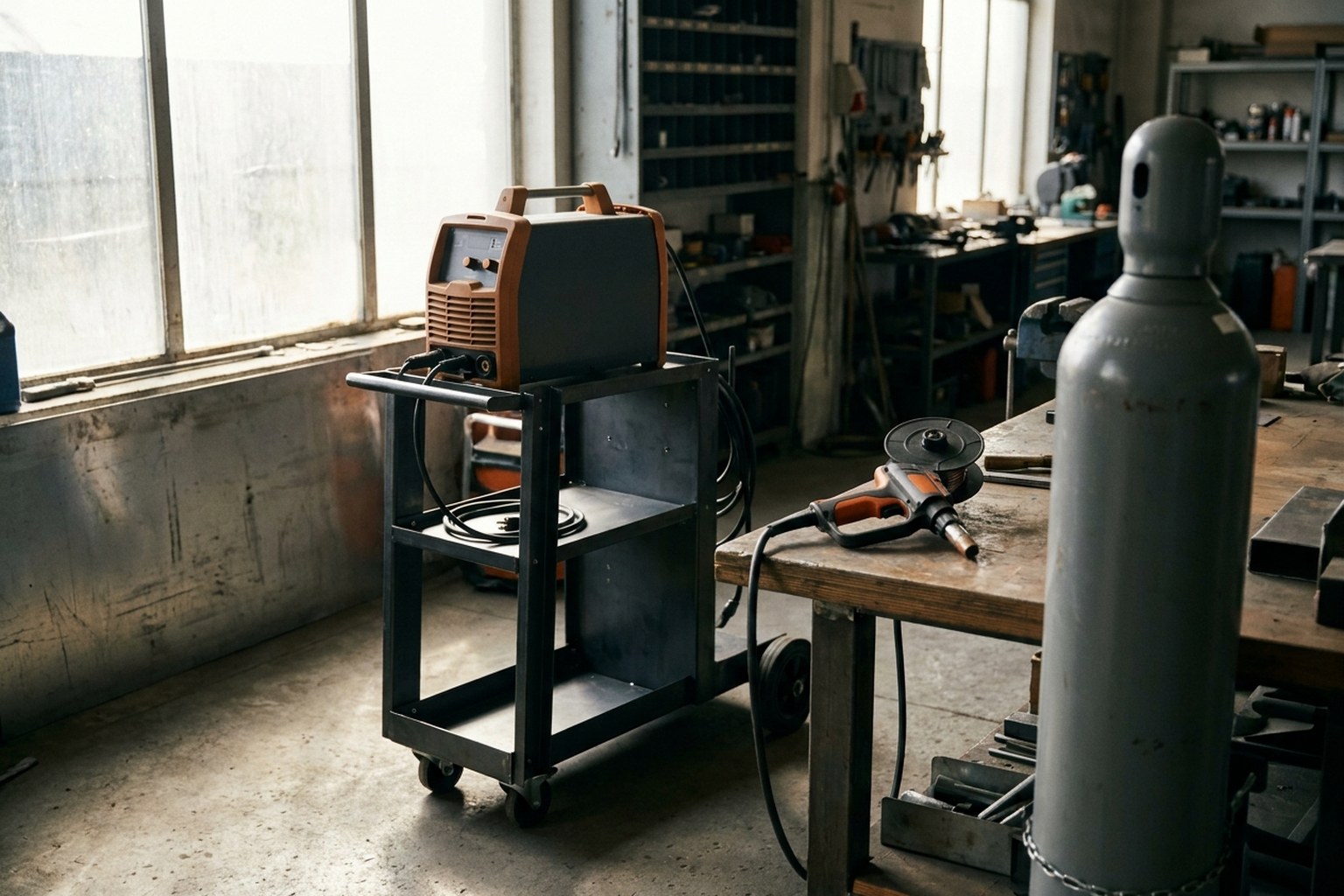
Aluminum is unforgiving with dirt. Miller's routine: degrease first, then scrub the joint with a stainless steel brush used only for aluminum. With the spool gun, always push (never drag) and hold about a 20 degree angle so the argon keeps covering the puddle; laying the gun flatter costs gas coverage. Expect to adjust wire speed and voltage on scrap of the same thickness before the real part.
Gasless flux-core wire for aluminum is not an option for normal MIG work, so a machine that only runs flux-core cannot weld aluminum.
MIG or AC TIG for aluminum?
MIG with a spool gun is faster and easier to learn, and it suits thicker parts, brackets, boat and trailer repairs. AC TIG is slower but gives finer control on thin sheet and visible welds; Miller's TIG guide says you need an AC/DC machine for aluminum, with the balance set towards electrode negative (70-90 % EN is typical). Our AC/DC TIG guide covers that route.
| MIG with spool gun | AC TIG | |
|---|---|---|
| Speed | Fast | Slow |
| Learning curve | Easier | Harder, two hands and a pedal |
| Thin sheet | Possible, less control | Best control |
| Extra kit | Spool gun, argon, aluminum wire | Pedal, argon, filler rod, tungsten |
Which of our rated machines can weld aluminum
- MIG with a spool gun mode: YESWELDER 205A 5-in-1 MIG Welder (rated 8.7/10) lists spool gun MIG among its five processes and dual voltage input. ARCCAPTAIN MIG200 6-in-1 MIG Welder (8.6/10) is listed as a 6-in-1 aluminum welding machine at 110V/220V. Check in each listing whether the spool gun is included.
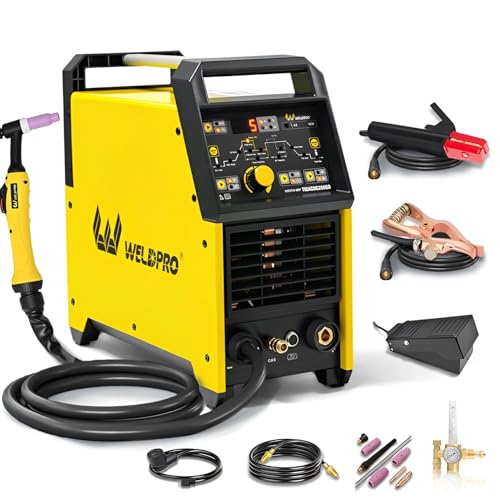
- AC TIG for aluminum: Weldpro 200A AC/DC Pulse TIG Welder (9.4/10) leads our AC/DC TIG ranking and is listed with a TIG torch and foot pedal; Sunstac 250A AC/DC TIG Welder (7.7/10) is listed with pulse and a foot pedal at 250 A.
- Not for aluminum: flux-core-only machines such as Lincoln Electric Weld-Pak 90i FC (7.1/10), useful for steel but without a gas or spool gun mode in the listing.
Our rated picks
The three best-rated models of our AC/DC TIG welders ranking, from the buyer review record and the listed specs.


Product images: Amazon listings
Frequently asked questions
Can you MIG weld aluminum without a spool gun?
Miller explains that pushing soft aluminum wire 10-15 feet through a standard MIG gun tends to tangle it at the drive rolls. A spool gun, which feeds the wire only a few inches, is the reliable way.
What gas do you use for MIG welding aluminum?
100 % argon. Miller says the argon/CO2 mix used for steel is not suitable for aluminum; the same regulator or flowmeter can be used.
Can you weld aluminum with flux core wire?
Not with ordinary MIG equipment. Aluminum MIG uses solid 4043 or 5356 wire with argon shielding, so a machine that only runs flux-core cannot weld aluminum.
Can a 110V MIG welder weld aluminum?
Miller recommends a welder that can run on 230 V for aluminum, because 115 V machines generally do not have enough power to overcome its heat conduction and oxide layer, which leads to poor fusion.
Sources
- Miller Electric — MIG Aluminum DIY: Selecting the Right Welder, Spool Gun and Filler Wire (consulted Nov 2026)
- Miller Electric — Ron Covell Shows You How to MIG Weld Aluminum with a Spool Gun (consulted Nov 2026)
- Hobart Brothers — Guidelines for Selecting the Most Appropriate Filler Metal (4043/4943 or 5356) (consulted Nov 2026)
- Miller Electric — Guide to TIG Welding Basics (consulted Nov 2026)