Multiprocess vs dedicated MIG welder: which to buy
Compare all-in-one machines with MIG-only units on process needs, included parts, wire range and documentation, without invented performance results.

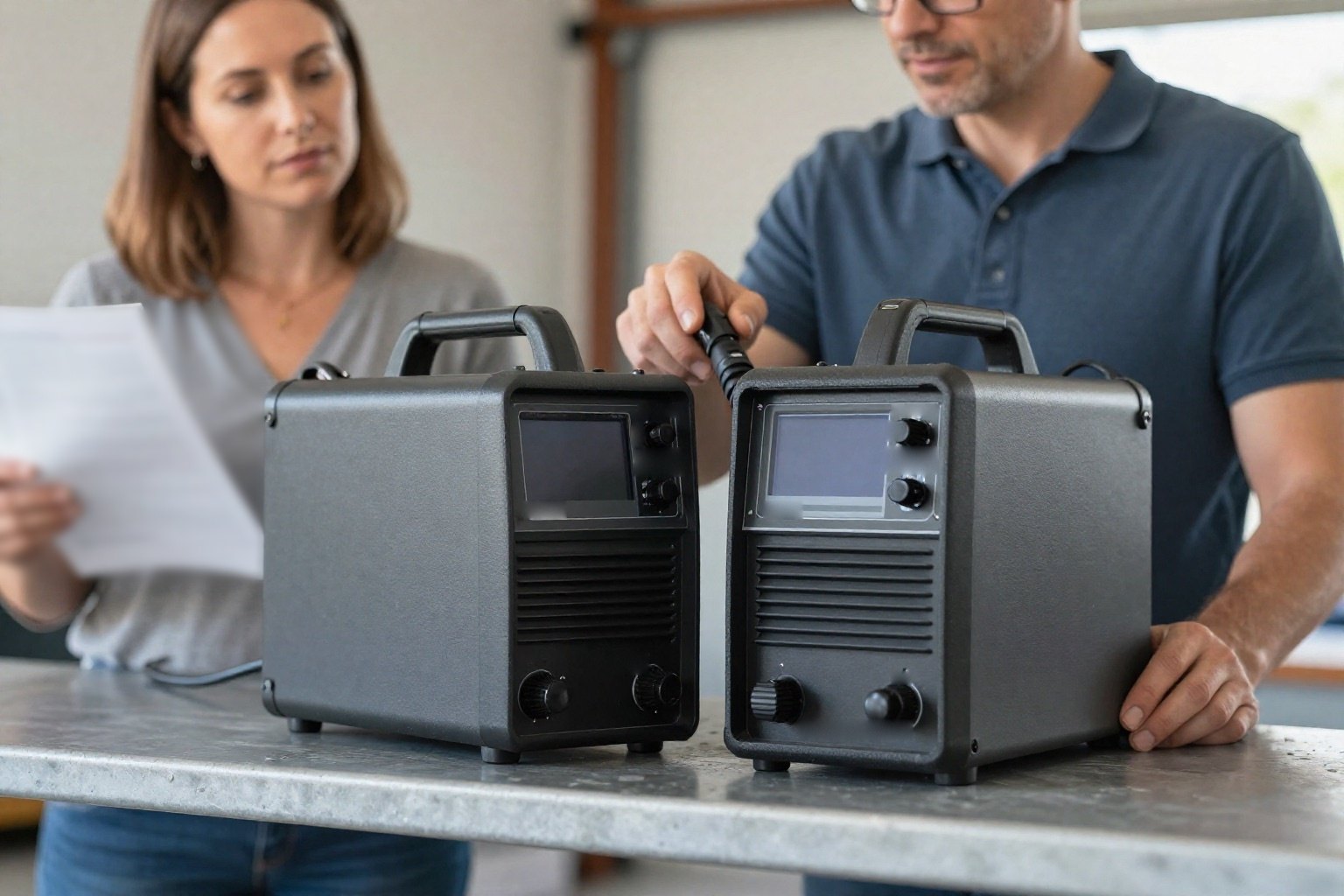
Buy a multiprocess welder if stick or TIG is genuinely on your list for the next year or two; buy a dedicated MIG welder if you will only ever run wire. A multiprocess machine saves you a second purchase, while a MIG-only machine puts the whole budget into the one process you use. Here is how to decide on your own projects, what to compare on both sides, and which machines from our rankings fit each choice.
Our rankings for this: best multiprocess welders and best flux core welders.
Affiliate disclosureAs an Amazon Associate we earn from qualifying purchases made through links on this page. Commissions never change our ratings.
Will you really use stick or TIG?
Be honest about the second process. Stick earns its place if you repair farm gear, fences or trailers outdoors, on rusty or thick steel: Miller Electric says stick and self-shielded flux-core are the ideal processes outside because neither needs a shielding gas. TIG earns its place if you want stainless, thin sheet with neat visible welds, or aluminum with an AC/DC machine. Miller calls TIG the most precise but also the slowest and hardest process to master.
If neither sounds like your next year, the extra modes are something you pay for and never use. Miller notes that multiprocess welders shine in shops that switch between stick, TIG, MIG and flux-core depending on the job; that is the question to ask yourself.
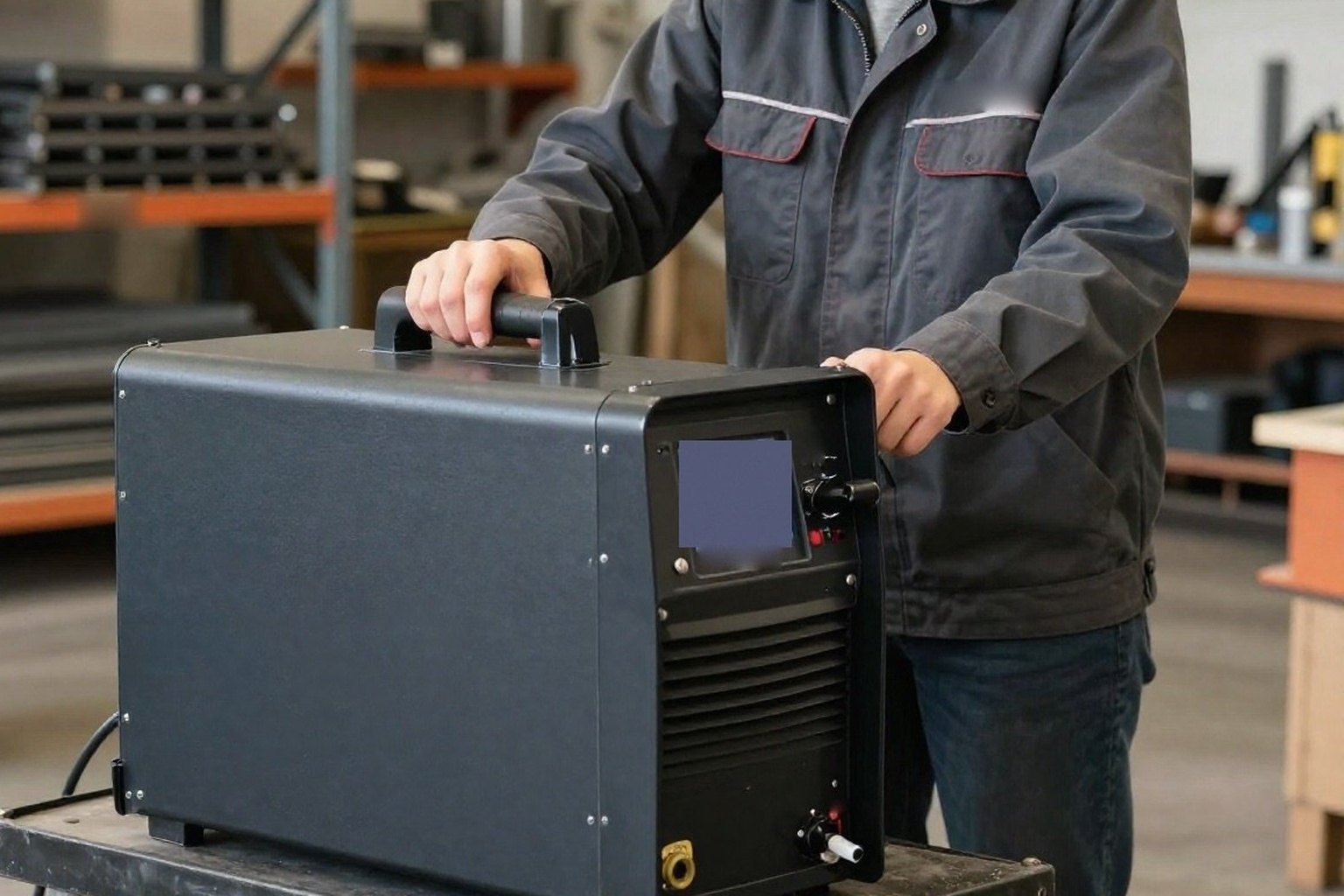
Compare the MIG side first
Whatever you buy, you will probably weld MIG most, so compare that part on equal terms:
- Wire sizes: Miller sizes wire by amperage: 0.023 in for 30-130 A, 0.030 in for 40-145 A, 0.035 in for 50-180 A. Check which sizes the drive rolls and contact tips in the box cover.
- Gas and flux: does the machine run gas MIG, or flux-core only? Several machines in our ranking are gasless.
- Spool gun: needed for aluminum MIG; check whether the machine has the connection and whether the gun ships.
- Output on your outlet: Miller's dual-voltage MIG welder is rated 110 A on 120 V and 160 A on 240 V at the same 60 % duty cycle, so compare both machines on the same input.
What comes in the box for each process
A process count is not a parts list. Miller's MIG-only Millermatic 211 PRO ships with the MIG gun, work cable, a power cord with 120 V and 240 V plugs, an argon and argon/CO2 regulator with hose, and drive rolls for solid and flux-cored wire: everything for its one process. On a multiprocess listing, look for the same completeness for each mode you want: a TIG torch (and pedal if you will do AC), an electrode holder for stick, the regulator for gas MIG. If the TIG torch is "sold separately", that is part of the real comparison.
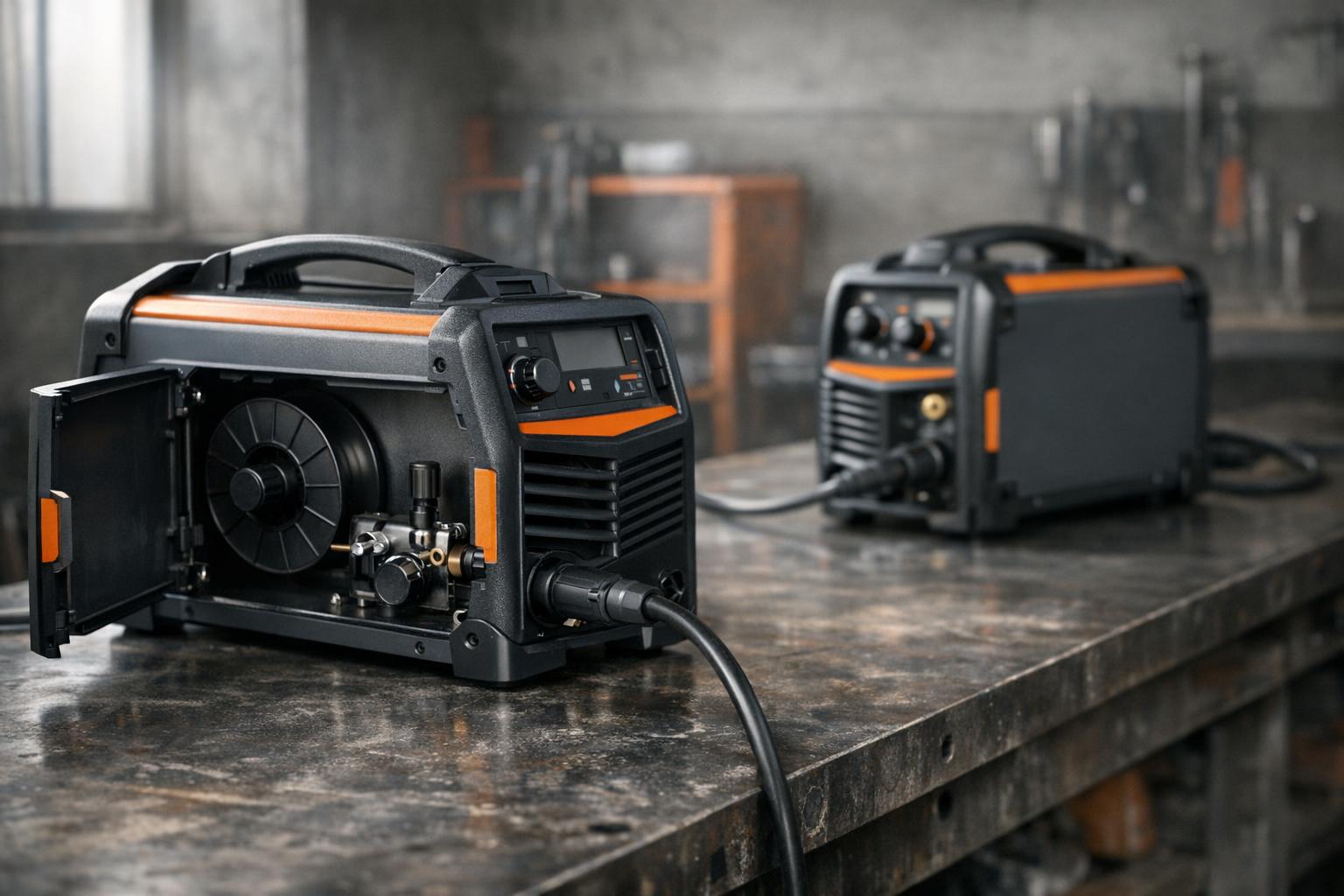
Duty cycle and power, side by side
Read both machines' duty cycles at the same amperage and input. Miller's Multimatic 220 AC/DC, a multiprocess machine, is rated 60 % at 105 A and 20 % at 200 A in MIG; a percentage without its amperage cannot be compared at all. Our duty cycle guide and the 110V vs 220V guide show how to put two listings on the same footing.
Which of our picks fits each choice
- Multiprocess, household outlet, lowest step in: YESWELDER 135A 3-in-1 MIG Welder (rated 9.4/10), listed with flux-core MIG, lift TIG and stick on 110 V.
- Multiprocess with gas MIG and aluminum by spool gun: YESWELDER 205A 5-in-1 MIG Welder (8.7/10), listed with MIG, flux-core, spool gun MIG, lift TIG and stick, dual voltage.
- Dedicated MIG, dual voltage: Lincoln Electric Power MIG 211i (9.2/10), listed with 20-211 A on 120/230 V and a 30 % duty cycle at 175 A, flux-cored ready.
- Dedicated MIG on 120 V: Hobart Handler 140EZ MIG Welder (7.1/10), listed at 30-140 A, flux-core and spool gun ready.
Compare the full field in our multiprocess welder ranking and the flux core MIG ranking, or start with the multiprocess buying checklist.
Our rated picks
The three best-rated models of our best multiprocess welders ranking, from the buyer review record and the listed specs.
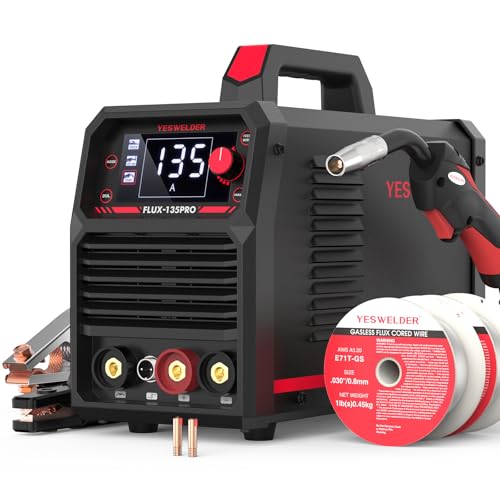


Product images: Amazon listings
Frequently asked questions
Is a multiprocess welder as good as a MIG welder?
For MIG work it can be, but compare the MIG side on its own: wire sizes, gas or flux only, spool gun and output on your input voltage. A dedicated MIG welder can ship a more complete MIG kit for the same budget.
Is it worth getting a multiprocess welder?
Yes, if you will use stick or TIG as well as MIG. Miller says multiprocess machines let you switch processes without buying several machines; if you only run wire, a MIG welder is simpler.
Can a MIG welder do stick or TIG?
Only if its listing names a stick (MMA) or TIG mode and the holder or torch for it. A MIG-only machine has neither.
What is the downside of a multiprocess welder?
You pay for modes you may not use, and some listings count processes whose torch is sold separately. Check the parts in the box for each process you want.
Sources
- Miller Electric — Buying Your First Welder: A Practical, Informative Guide for Do-It-Yourselfers (consulted Nov 2026)
- Miller Electric — MIG Welding: Setting the Correct Parameters (consulted Nov 2026)
- Miller Electric — Millermatic 211 PRO: specifications (consulted Nov 2026)
- Miller Electric — Guide to TIG Welding Basics (consulted Nov 2026)