AC/DC TIG welders for aluminum: what the listing must state
AC output, pulse control, foot pedal, torch type and duty cycle: the columns that qualify a TIG machine for aluminum, drawn from exact listings.

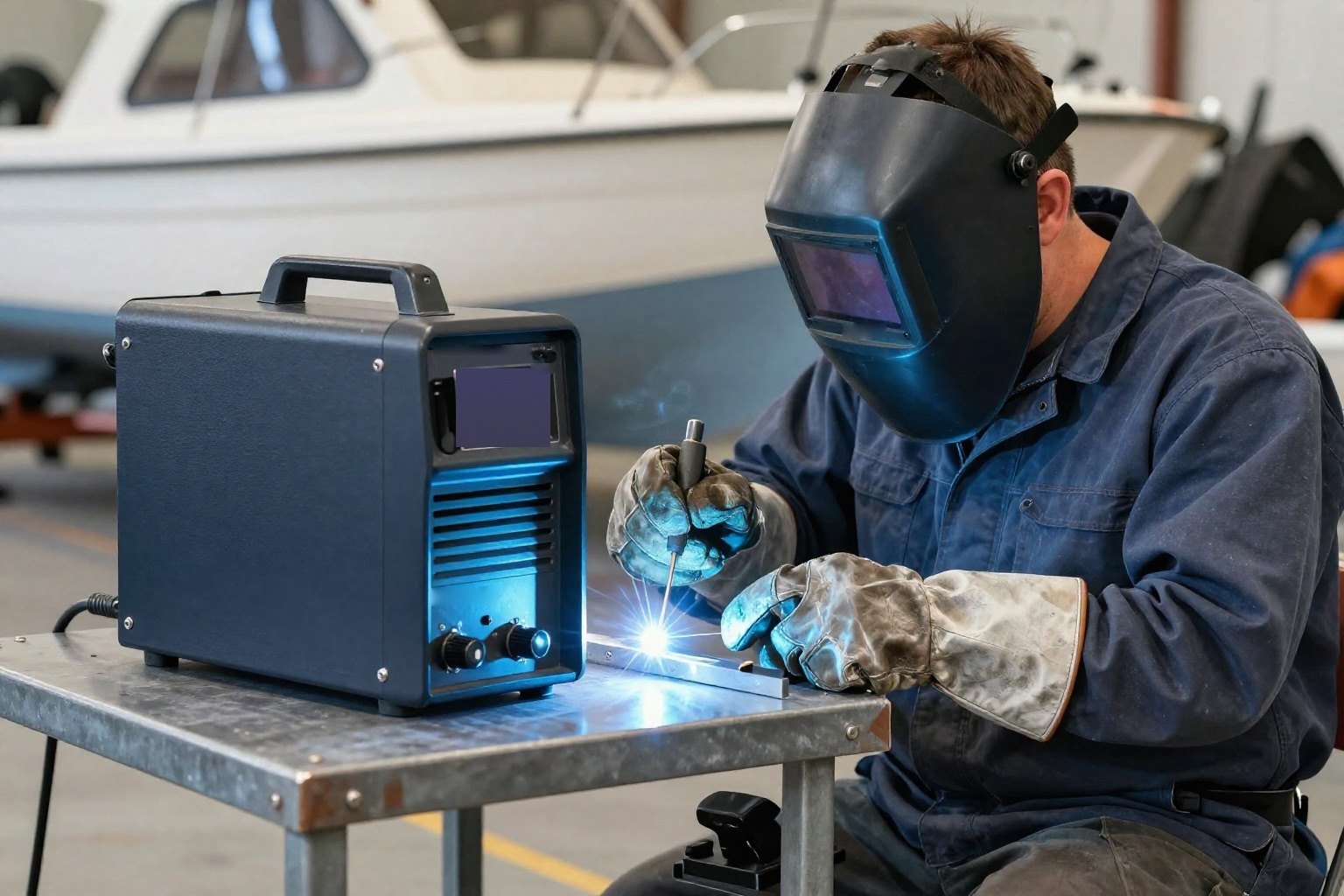
To TIG weld aluminum you need a TIG welder with AC output: Miller Electric says a DC-only TIG welder is enough for steel and stainless, but aluminum needs an AC/DC machine. After that, the features that decide how well it works are AC balance, AC frequency, a foot pedal and enough amperage on your input voltage. Here are those settings with real numbers, the extras to budget for and which of our rated AC/DC TIG welders fits which shop.
Our rankings for this: AC/DC TIG welders, best TIG welders and best TIG welders for beginners.
Affiliate disclosureAs an Amazon Associate we earn from qualifying purchases made through links on this page. Commissions never change our ratings.
Why aluminum needs AC
Aluminum is covered by an oxide skin that has to be broken before the metal fuses, and it pulls heat out of the joint fast (Miller). AC switches the current back and forth between the work and the tungsten. Miller's AC tungsten guide explains what each control does: the balance sets the cleaning action and the tungsten's life, the frequency mostly sets the arc width and penetration.
There is a cost to AC: it puts more heat into the tungsten than DC, where Miller says about 30 % of the heat goes to the electrode and 70 % to the work. That is why tungsten choice and balance matter more on aluminum than on steel.
AC balance and frequency in numbers
| Setting | Typical value | What it changes |
|---|---|---|
| AC balance | 70-90 % electrode negative | More EN = less heat on the tungsten, more on the work; less EN = more cleaning |
| AC frequency | 100-180 Hz | Higher = narrower, more stable arc and deeper penetration |
| Argon flow | 15-20 cfh | Too little gives porosity and dark, sooty welds |
| Post-flow | About 1 second per 10 A | Protects the tungsten and the end of the weld |
| Tungsten | 3/32 in for general work up to about 220 A | Larger if the tip melts into the puddle |
Before you buy, check that the listing or manual gives a balance range and a frequency range. A machine that only says "AC/DC" with no adjustable balance leaves you with the factory setting. Pulse, when listed, is an extra control; Miller's TIG basics do not list it as a requirement for aluminum.
Tungsten, gas and filler for aluminum
- Tungsten: on modern inverters use ceriated (gray) or lanthanated tungsten. Miller says pure (green) tungsten, the old transformer-era choice for aluminum, can give poor arc starts on inverter machines and is no longer recommended.
- Tip shape: grind a point on a wheel used only for tungsten; on aluminum the tip forms a ball, and Miller says to repoint it once the ball reaches the diameter of the tungsten.
- Gas: argon works for all TIG work on all metals, per Miller. Budget a cylinder and a regulator or flowmeter if the listing does not include one.
- Filler: 4043 and 5356 cover most aluminum; Hobart says 4043/4943 and 5356 are used in over 85 % of aluminum weldments. Our TIG rods guide explains the colors, sizes and filler for each metal.
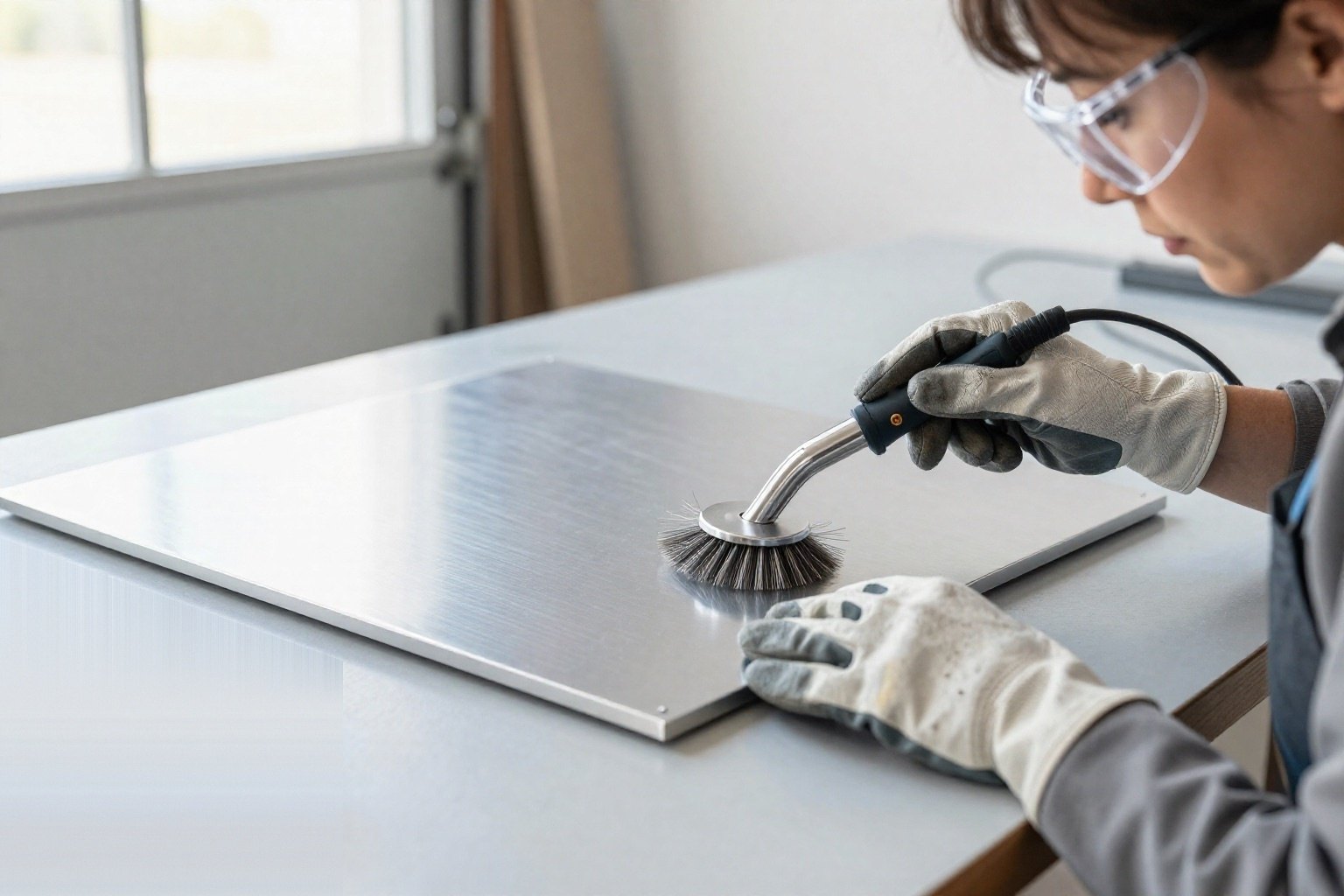
- Cleaning: degrease, then use a stainless brush kept for aluminum only (Miller).
Amperage, foot pedal and input power
Miller's rule of thumb is 1 amp per 0.001 inch of material, so 1/8 inch needs about 125 A. Aluminum's heat conduction pushes you towards the top of a machine's range on thicker parts, which is why the AC/DC machines in our ranking sit at 200 A or more. Read that amperage together with its duty cycle and the input voltage it applies to; our duty cycle guide shows how.
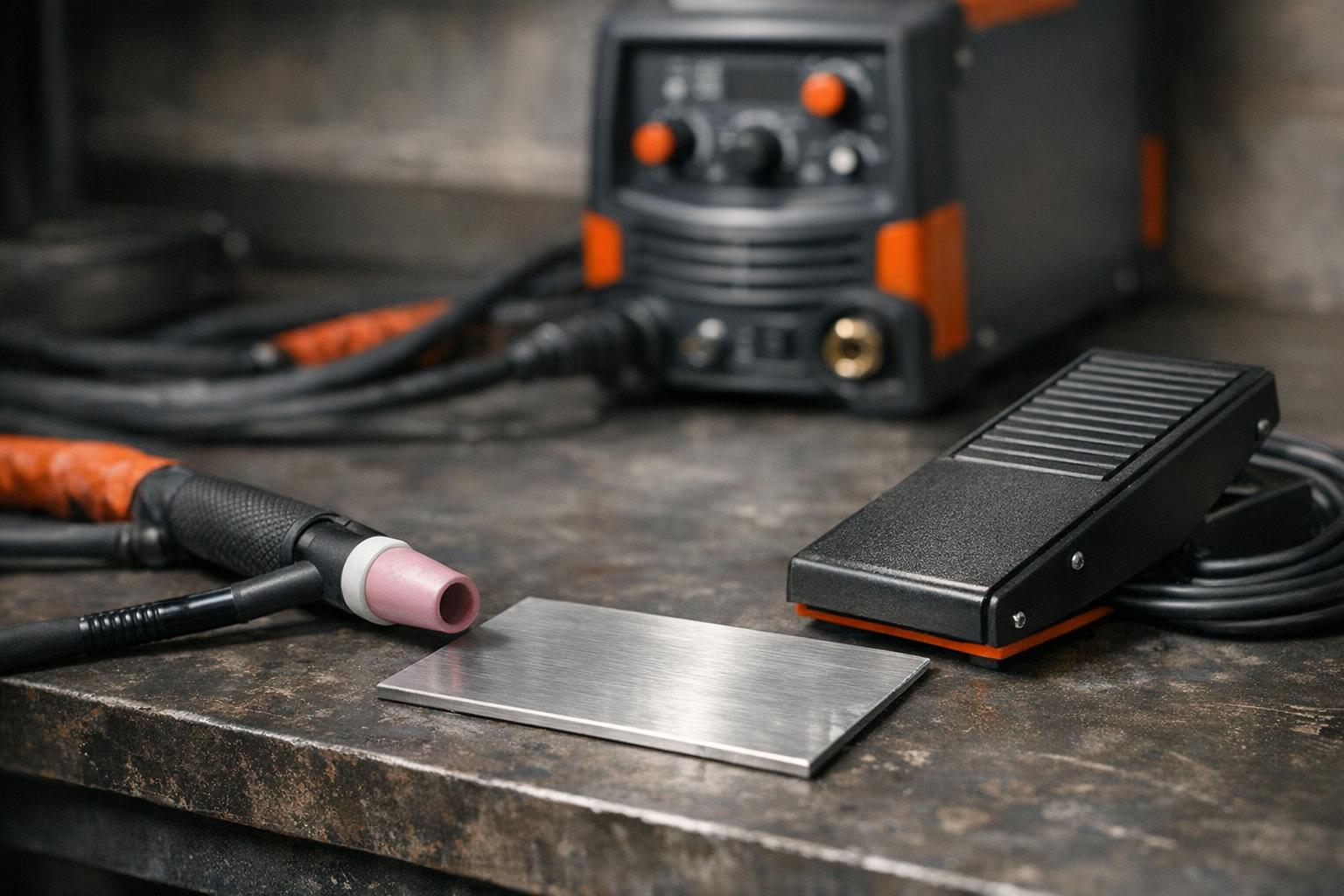
A foot pedal is what makes TIG on aluminum manageable: Miller lists adjustable heat input from a foot or hand control as a core TIG benefit, because you can heat the puddle up and cool it down mid-weld. Check that the pedal is in the box. For input power, dual voltage machines run on 120 V with less output and on 240 V at full output; see our 110V vs 220V guide.
Which of our AC/DC TIG welders fits
From our AC/DC TIG ranking; features as stated in each exact listing.
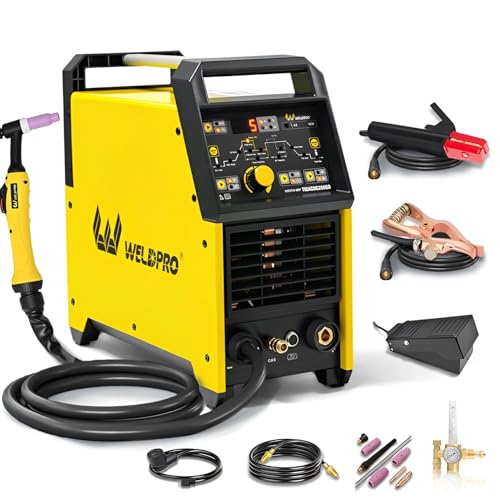
- Best all-rounder: Weldpro 200A AC/DC Pulse TIG Welder (rated 9.4/10). AC TIG, DC TIG, AC and DC pulse and stick, 110V/220V, listed with TIG torch and foot pedal, 40 % duty cycle at 200 A.
- More amperage: Sunstac 250A AC/DC TIG Welder (7.7/10), a 250 A AC/DC TIG welder with pulse and foot pedal control in its listing.
- Simple 200 A AC/DC: YESWELDER TIG-200P AC/DC (7.3/10), listed as a 200 A AC/DC aluminum TIG welder. Check pedal and accessories in the listing.
- Many modes in one box: ANDELI 8-in-1 AC/DC TIG Welder 200A (7.3/10), listed with AC/DC TIG, pulse, lift TIG, spot and stick at 110V/220V.
Whichever you choose, confirm in the listing or manual: the AC balance range, the AC frequency range, the torch type, whether the pedal and a regulator ship, and the duty cycle at the amperage you will use. MIG on aluminum is the other route, covered in can you weld aluminum with a MIG welder.
Our rated picks
The three best-rated models of our AC/DC TIG welders ranking, from the buyer review record and the listed specs.


Product images: Amazon listings
Frequently asked questions
Can you TIG weld aluminum with DC?
Not in normal practice. Miller says a DC-only TIG welder suits steel and stainless, and to choose an AC/DC TIG welder for aluminum, with the machine set to AC.
What amperage TIG welder do I need for aluminum?
Use about 1 amp per 0.001 inch of thickness as a start (Miller), so roughly 125 A for 1/8 inch. A 200 A AC/DC machine covers most home aluminum work; check its duty cycle at that amperage.
What gas do you use to TIG weld aluminum?
Pure argon, at about 15-20 cfh for general work according to Miller. Argon can be used for all TIG applications and metals.
What tungsten is best for aluminum on an inverter TIG?
Ceriated (gray) or lanthanated tungsten. Miller says pure green tungsten, the old choice for AC, is no longer recommended on inverter machines because of poor arc starting.
Sources
- Miller Electric — Guide to TIG Welding Basics (consulted Nov 2026)
- Miller Electric — How to Choose the Best Tungsten for AC TIG Welding (consulted Nov 2026)
- Miller Electric — MIG Aluminum DIY: Selecting the Right Welder, Spool Gun and Filler Wire (consulted Nov 2026)
- Miller Electric — Ron Covell Shows You How to MIG Weld Aluminum with a Spool Gun (consulted Nov 2026)
- Miller Electric — Buying Your First Welder: A Practical, Informative Guide for Do-It-Yourselfers (consulted Nov 2026)
- Hobart Brothers — Guidelines for Selecting the Most Appropriate Filler Metal (4043/4943 or 5356) (consulted Nov 2026)