MIG, flux-core and spool gun modes explained
Gas MIG, gasless flux-core and spool-gun aluminum MIG are three different setups; learn what each mode requires and how listings describe them.

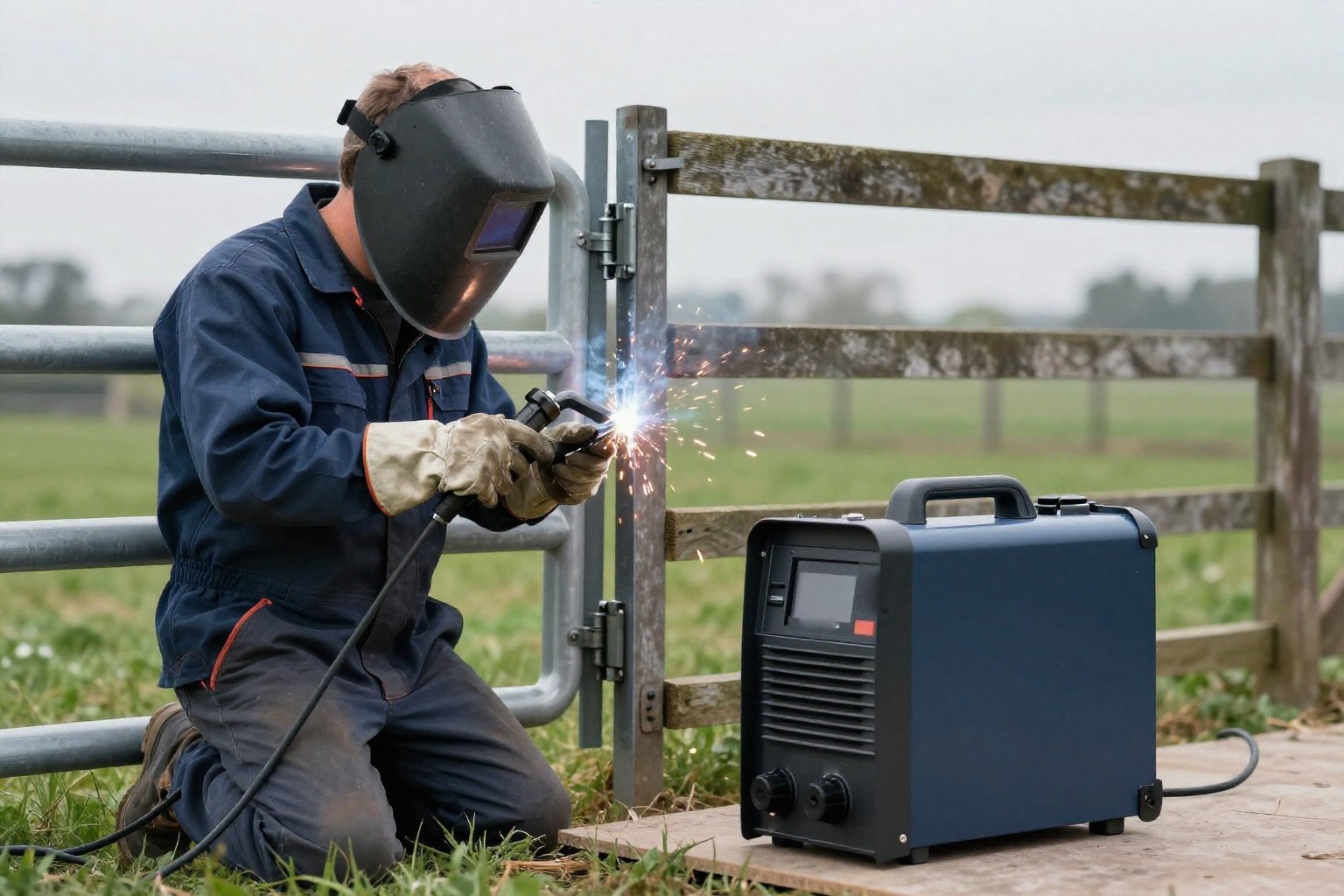
Gas MIG, gasless flux-core and spool gun MIG are three different wire setups that one welder can offer: solid steel wire with a shielding gas, self-shielded flux-cored wire with no gas bottle, and soft aluminum wire fed from a small spool on the gun. Each needs its own wire, polarity, drive roll and gun technique. Here is what changes between the three, what each one costs you in extra parts, and which of our rated machines supports which mode.
Our rankings for this: best flux core welders and best multiprocess welders.
Affiliate disclosureAs an Amazon Associate we earn from qualifying purchases made through links on this page. Commissions never change our ratings.
Three modes, three setups
| Gas MIG (steel) | Flux-core (gasless) | Spool gun MIG (aluminum) | |
|---|---|---|---|
| Wire | Solid steel wire, e.g. ER70S-6 | Self-shielded flux-cored wire | Aluminum 4043 or 5356 |
| Gas | 75 % argon / 25 % CO2, or CO2 | None, the flux shields the weld | 100 % argon |
| Polarity | DCEP (electrode positive) | DCEN (electrode negative) | As the machine manual states |
| Drive roll | Roll for solid wire | Knurled roll for softer cored wire | Inside the spool gun |
| Gun technique | Push, about 15 degree travel angle | Drag: "if there is slag, you drag" | Push, about 20 degree angle |
| Cleanup | No slag | Slag to chip off | No slag; metal must be very clean |
Sources for the table: Hobart's Handler 140 spec sheet (ER70S-6 on DCEP with 75/25 gas, flux-cored on DCEN), Miller Electric's flux-core basics (DCEN, knurled rolls, drag), Miller's MIG tips for beginners (push, 15 degrees) and Miller's spool gun guide (pure argon, push at 20 degrees). Changing modes therefore means swapping the polarity leads, which Miller says usually sit inside the machine next to the drive rolls, and the drive roll.
Gas MIG: the clean mode for thin steel
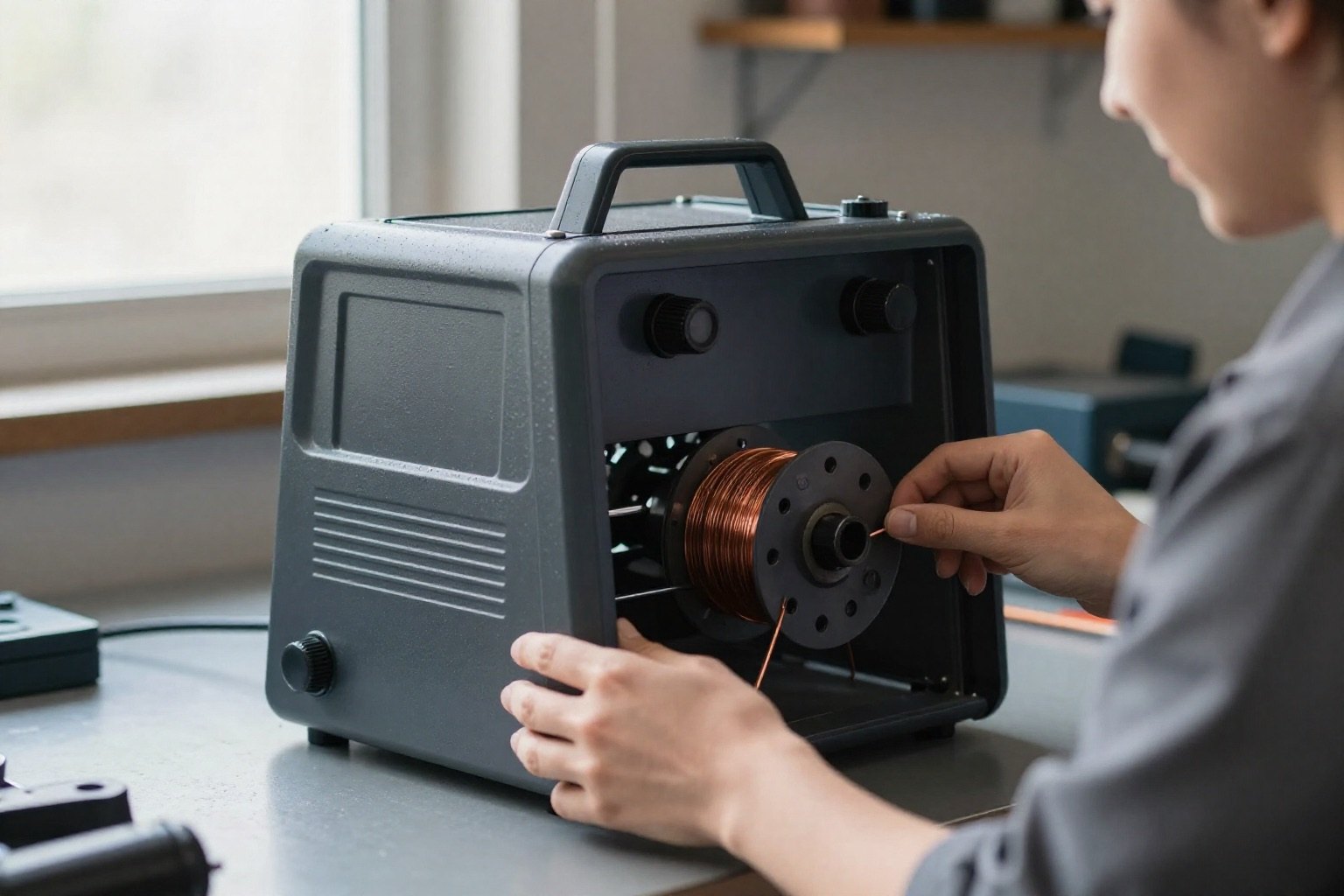
Gas MIG gives the neatest welds with no slag and the best control on thin sheet, which is why Miller calls it the easiest process to learn. The price is a gas cylinder and regulator, and a shop out of the wind. Miller's starting points: a gas flow of about 20 cubic feet per hour for light work, a wire stickout of around 3/8 inch, and a wire size chosen by amperage.
| Wire | Amperage range |
|---|---|
| 0.023 in | 30-130 A |
| 0.030 in | 40-145 A |
| 0.035 in | 50-180 A |
| 0.045 in | 75-250 A |
Porosity and pinholes across the bead almost always mean the gas is missing or blown away, according to Miller's parameter guide.
Flux-core: no bottle, more slag and fume
Self-shielded flux-cored wire carries its shield inside the wire, so there is no bottle to buy, refill or carry. Miller recommends it outdoors, in wind and on dirty or rusty steel, and notes deep penetration and a high deposition rate on thick sections. Both MIG and flux-core can join steel as thin as 26 gauge, per Miller.
The trade-offs are real. There is slag to chip after every pass, the bead looks rougher than gas MIG, and OSHA's fume fact sheet ranks flux-core as the arc process that makes the most fume, ahead of stick, MIG and TIG. Weld with the door open or with extraction, and keep your head out of the plume. Technique matters too: Miller says always drag flux-core, with a travel angle of 5 to 15 degrees.
Spool gun: the aluminum mode
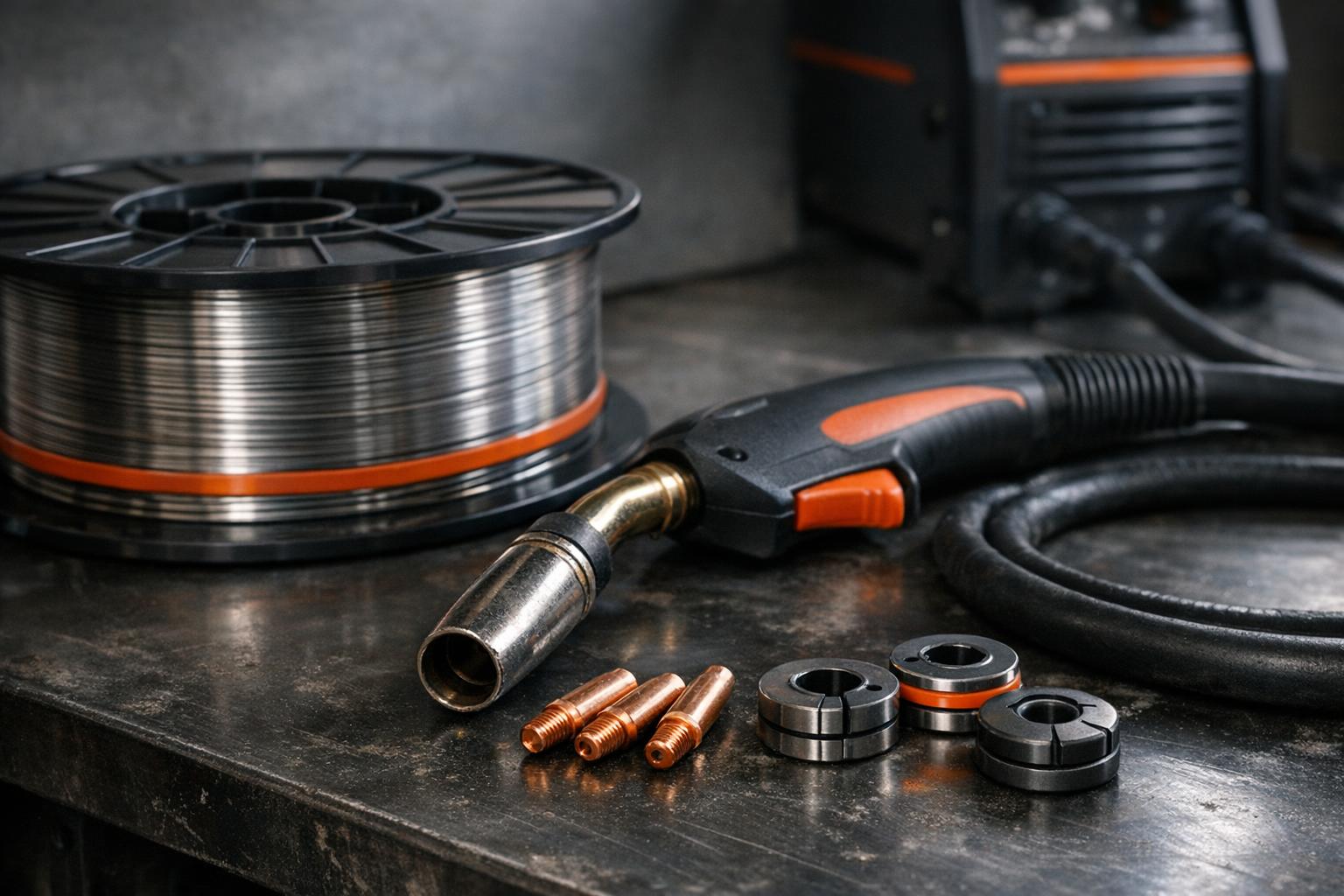
Aluminum wire is too soft to push through a standard 10 to 15 foot MIG gun without tangling. A spool gun puts a small 1 lb, 4 inch spool on the gun, so the wire travels only a few inches (Miller). The welder needs a spool gun connection, and the gun itself is often sold separately, so read the package line of the listing carefully. Spool guns have their own ratings too: Miller's smallest is rated 135 A at 30 %, its bigger ones 150 to 160 A at 60 %.
Add pure argon, 4043 wire for most DIY work and a 240 V supply if you can, as Miller recommends for aluminum. All the details are in our guide on MIG welding aluminum.
What each mode costs you, and which of our picks supports it
- Gas MIG: a cylinder of argon/CO2 or CO2, a regulator or flowmeter, solid wire and the right drive roll. Miller reminds buyers to budget for gas and consumables on top of the welder.
- Flux-core: only flux-cored wire and a knurled roll. The cheapest mode to run, the messiest to clean.
- Spool gun: the gun (often separate), 100 % argon and aluminum wire.
From our flux core MIG ranking and the multiprocess ranking, with modes as stated in each exact listing:
- Lincoln Electric Power MIG 211i (rated 9.2/10): MIG, flux-cored ready, dual voltage 120/230 V. The strongest all-round wire machine of the ranking.
- Hobart Handler 140EZ MIG Welder (7.1/10): 120 V, flux-core and spool gun ready, a simple garage machine that can grow into aluminum.
- Lincoln Electric Weld-Pak 90i FC (7.1/10): a flux-core-only 120 V welder for small jobs. No gas mode, so no aluminum.
- YESWELDER 205A 5-in-1 MIG Welder (8.7/10): MIG, flux-core and spool gun MIG plus lift TIG and stick, dual voltage, if you want every wire mode and more.
Our rated picks
The three best-rated models of our best flux core welders ranking, from the buyer review record and the listed specs.
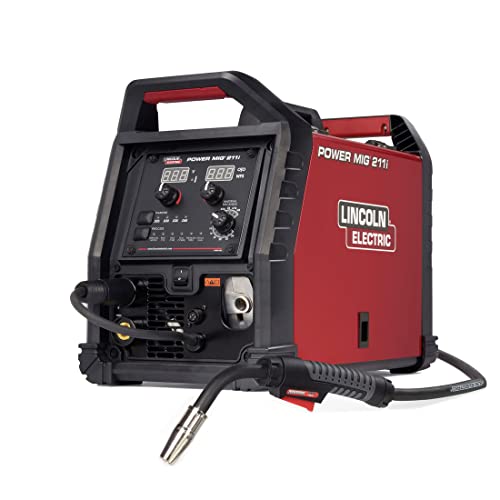


Product images: Amazon listings
Frequently asked questions
Is flux core welding the same as MIG?
It uses the same wire-feed machine and gun, but the wire is hollow and filled with flux that shields the weld, so no gas bottle is needed. It runs on DCEN and leaves slag, while gas MIG with solid wire runs on DCEP and leaves none.
Do I need a spool gun to weld aluminum?
For MIG, practically yes. Soft aluminum wire tends to tangle when pushed 10 to 15 feet through a standard gun, and Miller recommends a spool gun with 100 % argon.
Which is better for a beginner, MIG or flux core?
Gas MIG is cleaner and easier to read, Miller calls it the easiest process to learn. Flux-core is the better start if you weld outdoors or do not want a gas bottle, at the cost of slag and more fume.
Do you need gas for flux core welding?
Not with self-shielded flux-cored wire, which is what gasless machines use. Miller notes that some flux-cored wires are gas-shielded, so check the wire box before you buy.
Sources
- Miller Electric — Flux-Cored Welding: The Basics for Mild Steel (consulted Nov 2026)
- Miller Electric — MIG Welding Tips and Techniques for Beginners (consulted Nov 2026)
- Miller Electric — MIG Welding: Setting the Correct Parameters (consulted Nov 2026)
- Miller Electric — Ron Covell Shows You How to MIG Weld Aluminum with a Spool Gun (consulted Nov 2026)
- Miller Electric — MIG Aluminum DIY: Selecting the Right Welder, Spool Gun and Filler Wire (consulted Nov 2026)
- Miller Electric — Buying Your First Welder: A Practical, Informative Guide for Do-It-Yourselfers (consulted Nov 2026)
- Hobart Welding Products (spec sheet, dealer-hosted PDF) — Handler 140 specification sheet (consulted Nov 2026)
- U.S. Occupational Safety and Health Administration — Controlling Hazardous Fume and Gases during Welding (fact sheet, PDF) (consulted Nov 2026)