Welding machine safety and PPE basics
A purchasing checklist for helmets, gloves, ventilation and the manual sections to read; not an operating procedure.

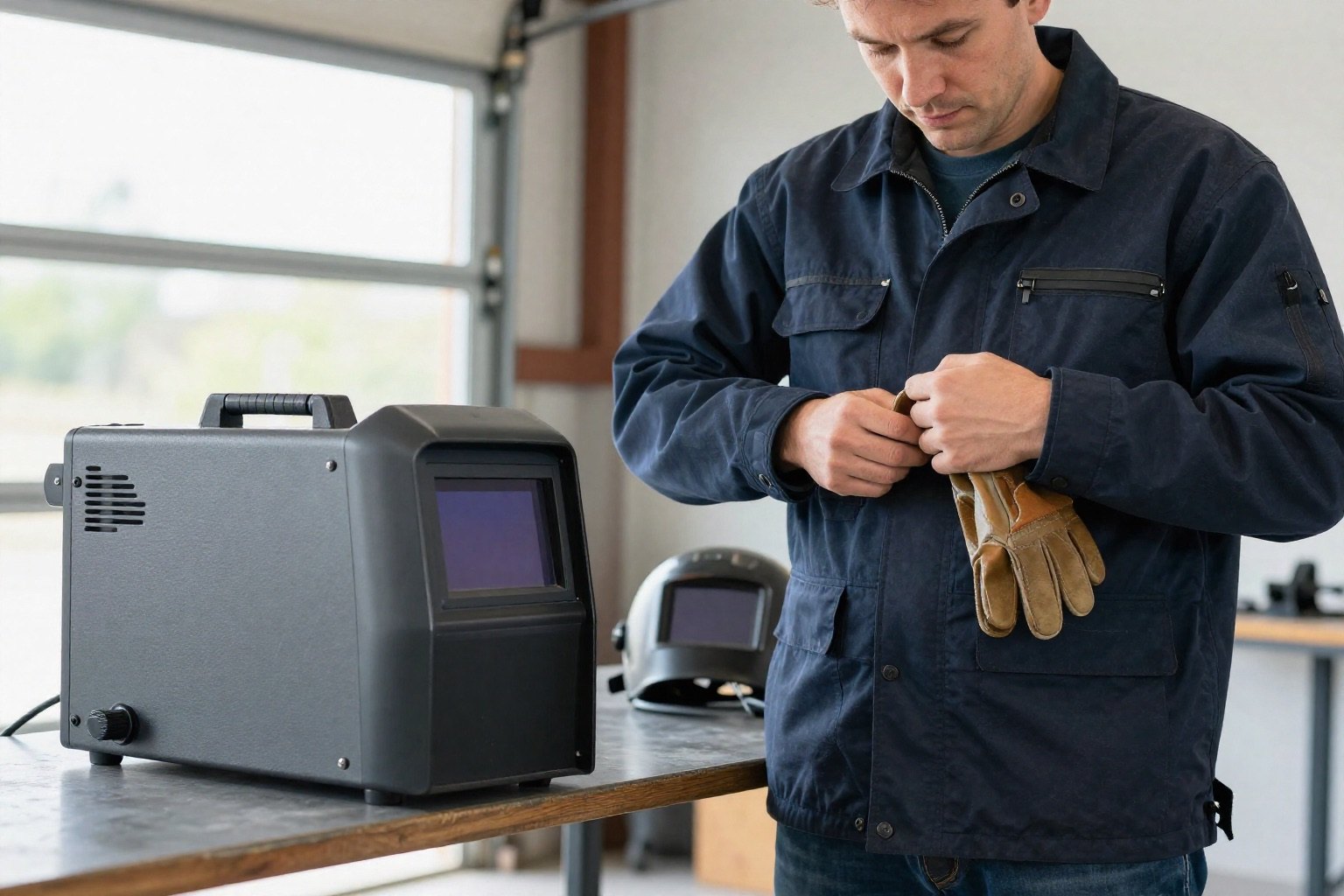
Before your first arc you need a welding helmet with the right shade for your process and amperage, safety glasses under it, flame-resistant gloves and clothing, leather boots, ventilation that keeps fume out of your face, and a work area cleared of anything that can burn. Budget for this kit together with the welder. Here are the numbers that matter (shade by process, fire distances, fume by process) from OSHA and Miller Electric, and a shopping list you can work through.
Our rankings for this: best TIG welders for beginners and best multiprocess welders.
Affiliate disclosureAs an Amazon Associate we earn from qualifying purchases made through links on this page. Commissions never change our ratings.
Helmet and shade: the numbers by process
The shade number sets how much light the filter lets through; higher is darker. OSHA's fact sheet lists a legal minimum and a suggested shade for each process and current:
| Process | Current | Minimum | Suggested |
|---|---|---|---|
| Stick (SMAW) | 60-160 A | 8 | 10 |
| Stick (SMAW) | 160-250 A | 10 | 12 |
| MIG and flux-core | 60-160 A | 10 | 11 |
| MIG and flux-core | 160-250 A | 10 | 12 |
| TIG | 50-150 A | 8 | 12 |
| TIG | 150-500 A | 10 | 14 |
| Plasma cutting (light) | under 300 A | 8 | 9 |
OSHA's method: start with a shade too dark to see the weld zone, then go lighter until you see it well, without going below the minimum. A variable-shade auto-darkening helmet that covers about 9 to 13 handles all of these at home amperages. Miller adds two points: wear safety glasses under the helmet against UV and debris, and keep them on when you are not welding, because others in the shop may be.
Gloves, clothing and boots
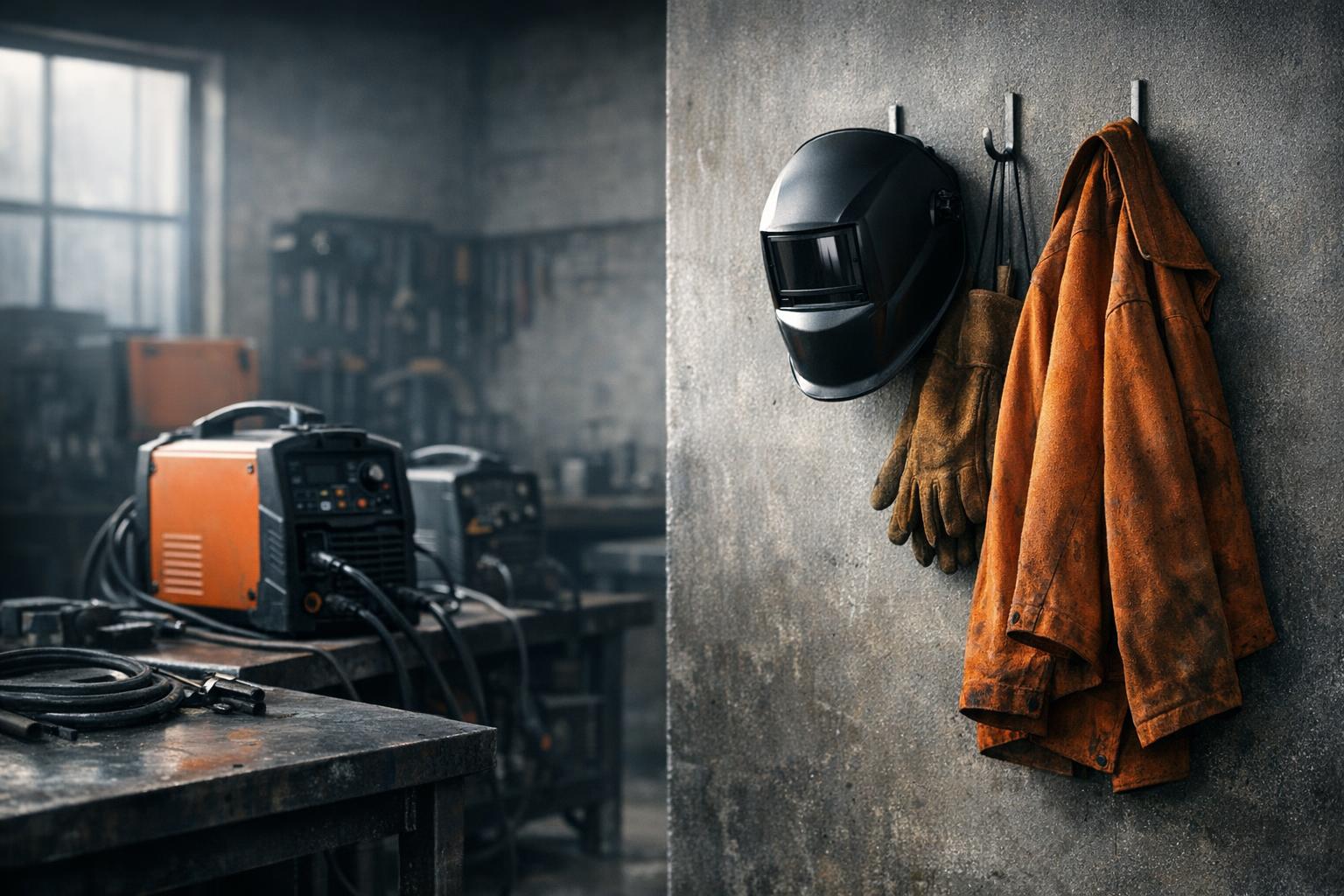
- Gloves: flame-resistant welding gloves that protect against burns, cuts and electric shock (Miller).
- Clothing: skin fully covered, with flame-resistant or leather jacket, sleeves and trousers (Miller).
- Boots: Miller recommends steel-toed boots.
- Breathing: when ventilation cannot keep fume away, a half mask with filters, or a powered air purifying respirator (PAPR), per Miller.
Fume: which processes make the most
OSHA ranks the arc processes from most fume to least: flux-core, stick, MIG, then TIG. Fume from coatings and from stainless (hexavalent chromium) is especially harmful, and OSHA says to clean paint and coatings off before welding, keep your head out of the plume, and use local exhaust close to the arc. It also warns that welding outdoors does not guarantee good ventilation, and that argon, CO2 and helium displace oxygen in confined or enclosed spaces.
For a garage that means: door open, a fan pulling fume away from you rather than towards you, or a fume extractor close to the work, and no welding of galvanized or painted steel until it is stripped.
A fire-safe work area
OSHA's welding rule for workplaces is a good benchmark at home. Combustibles should be moved at least 35 feet (10.7 m) from the work, or covered with fire-resistant covers or shielded; floors with sawdust or paper need sweeping for the same 35 foot radius; suitable fire extinguishing equipment must be ready for instant use; and where there are combustibles within 35 feet, a fire watch is required. Wall openings and ducts that can carry sparks elsewhere need covering too.
- Clear the bench and floor; no rags, cardboard or fuel cans nearby.
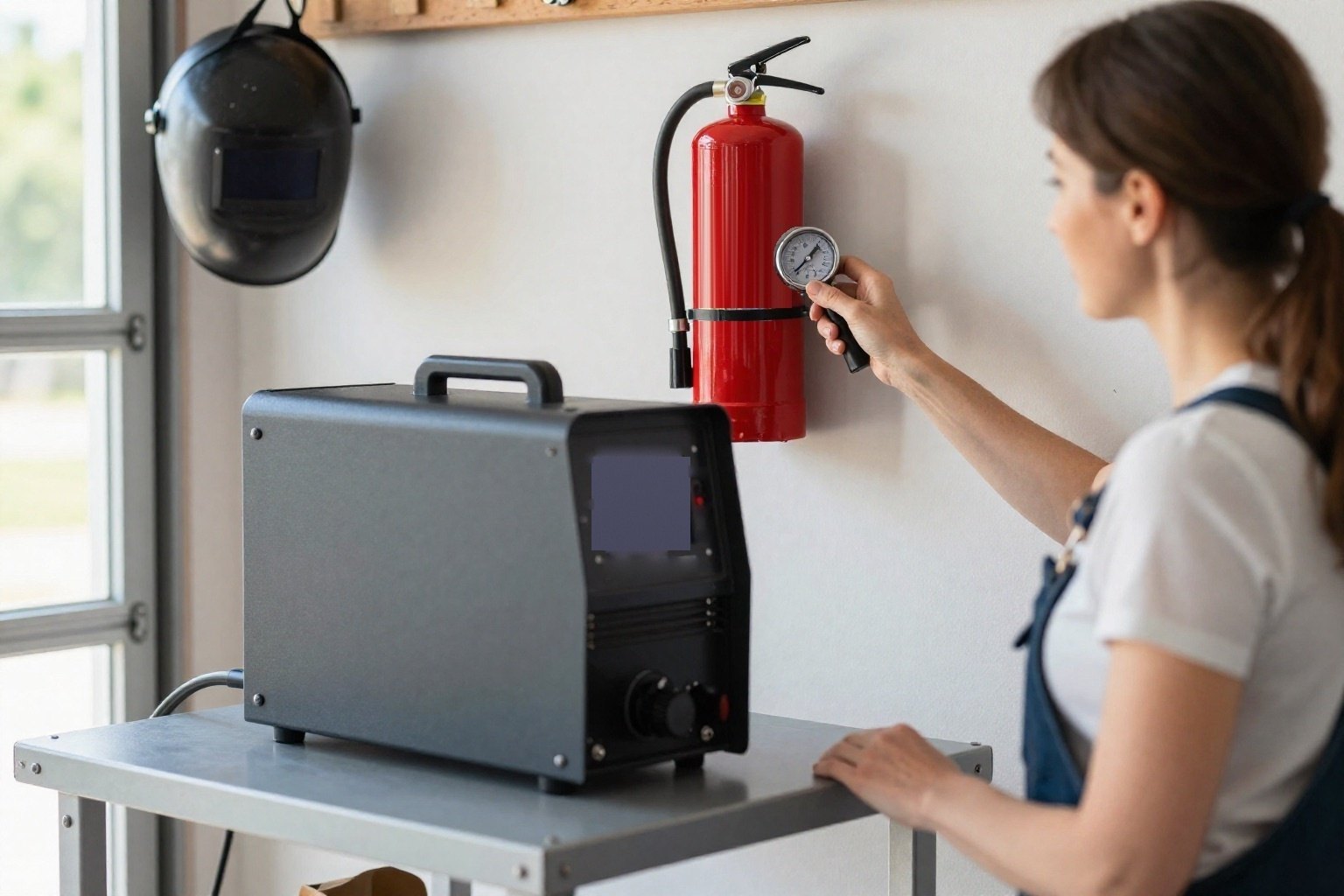
- Keep an extinguisher within reach and check it is charged.
- After welding, keep watching the area: OSHA's fire watch lasts at least half an hour, to catch smouldering fires.
- Never weld on used drums, tanks or containers unless they have been thoroughly cleaned of anything flammable (OSHA).
Shopping list and our rated gear
Miller's advice to first-time buyers is to budget for protective gear, gas and consumables on top of the welder. A practical first list:
| Item | What to check |
|---|---|
| Auto-darkening helmet | Shade range covering your processes (see the OSHA table) |
| Safety glasses | Worn under the helmet |
| Welding gloves | Flame-resistant, protect against burns, cuts and shock |
| Flame-resistant jacket or sleeves | Full skin cover |
| Leather or steel-toed boots | No mesh trainers |
| Fire extinguisher | Within reach, charged |
| Ventilation or extractor | Fume away from your face |
In our accessory catalogue: YESWELDER LYG-M800H Welding Helmet (rated 7.1/10), an auto-darkening helmet with a large view, and Tillman 1328 Goatskin TIG Gloves, Large (6.3/10), goatskin TIG gloves. Check the shade range in the helmet's listing against the table above. More in our welding accessories collection, and for a first machine see the beginner's guide.
Our rated picks
The three best-rated models of our best multiprocess welders ranking, from the buyer review record and the listed specs.
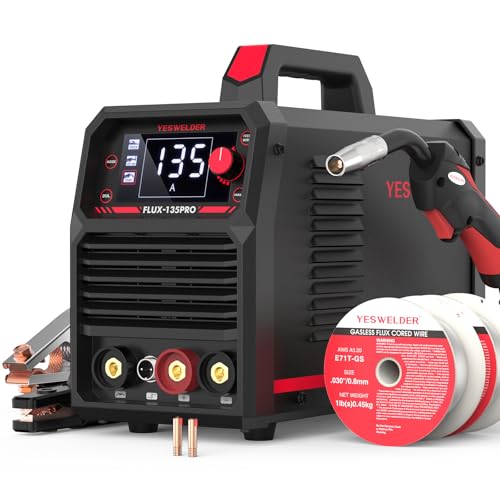


Product images: Amazon listings
Frequently asked questions
What PPE do you need for welding?
A welding helmet with the right shade, safety glasses under it, flame-resistant gloves and clothing, and steel-toed or leather boots, per Miller. Add a respirator when ventilation cannot keep fume away.
What shade should a welding helmet be?
It depends on the process and current. OSHA suggests shade 11 for MIG at 60-160 A, 10 for stick at 60-160 A and 12 for TIG at 50-150 A, and never below the minimum (10, 8 and 8).
Can I weld in my garage safely?
Yes, with the door open or extraction, combustibles moved about 35 feet away or covered (OSHA's benchmark), an extinguisher ready and no painted or galvanized metal welded before stripping.
Which welding process makes the most fume?
Flux-core, then stick, then MIG, with TIG making the least, according to OSHA's welding fume fact sheet.
Sources
- U.S. Occupational Safety and Health Administration — Eye Protection against Radiant Energy during Welding and Cutting (fact sheet, PDF) (consulted Nov 2026)
- U.S. Occupational Safety and Health Administration — Controlling Hazardous Fume and Gases during Welding (fact sheet, PDF) (consulted Nov 2026)
- U.S. Occupational Safety and Health Administration — 29 CFR 1910.252: Welding, cutting and brazing, general requirements (consulted Nov 2026)
- Miller Electric — The Fundamentals of Welding: Process, Equipment and Applications (consulted Nov 2026)
- Miller Electric — Buying Your First Welder: A Practical, Informative Guide for Do-It-Yourselfers (consulted Nov 2026)