110V vs 220V welders: what listings actually state
Dual-voltage wording explained: what a listing can tell you about input, what only a manual and a qualified electrician can confirm.

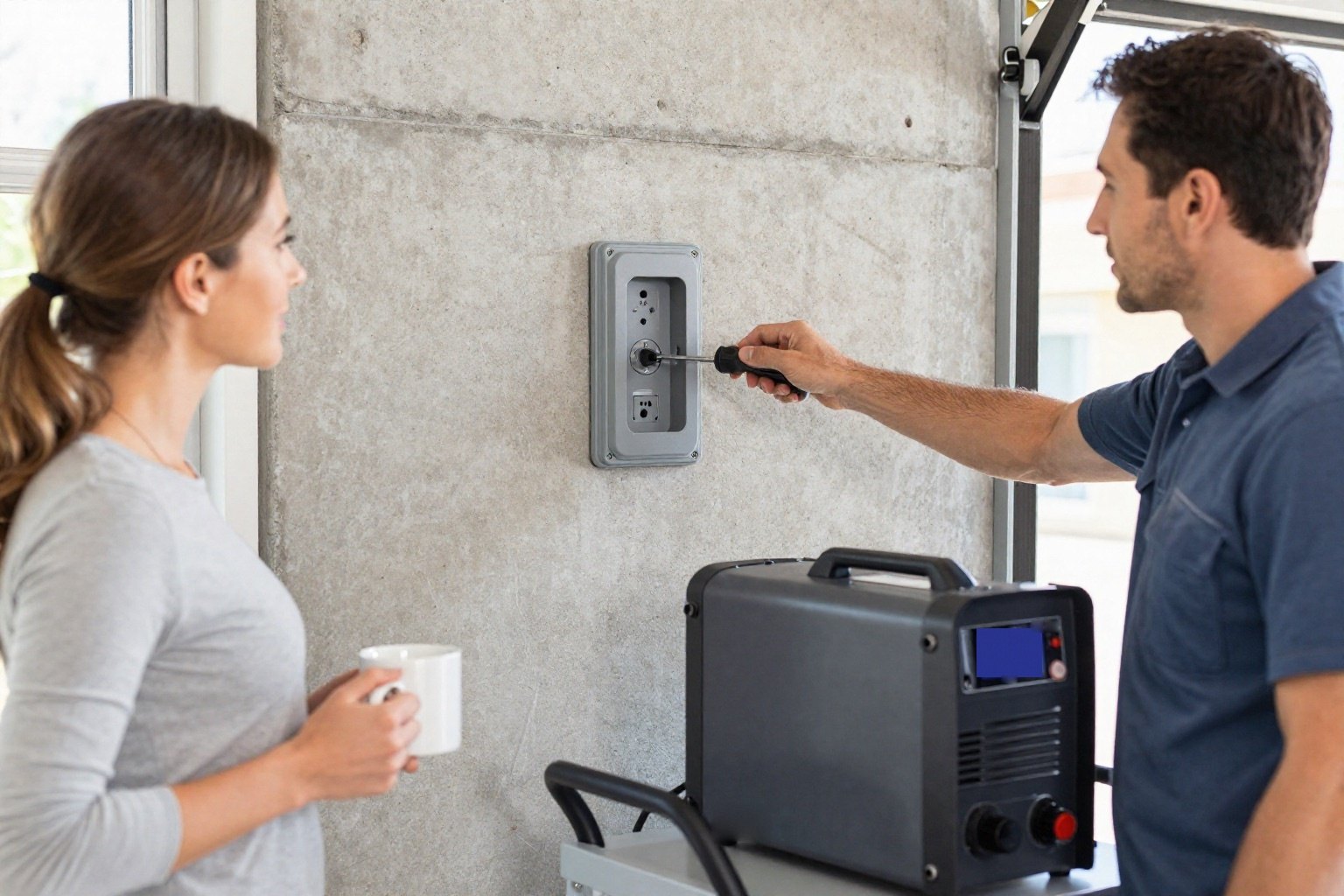
A 110/120 V welder runs on a normal household outlet but gives less output, while a 220/240 V welder needs a dedicated higher-voltage circuit and reaches its full rated amperage. A dual-voltage welder does both: you weld thin sheet on 120 V and switch the plug for thicker steel on 240 V. This guide shows how much output you lose on 120 V, which circuit each needs according to the manufacturers, and how to read what a listing actually promises.
Our rankings for this: best multiprocess welders, portable multiprocess welders, best portable TIG welders and best flux core welders.
Affiliate disclosureAs an Amazon Associate we earn from qualifying purchases made through links on this page. Commissions never change our ratings.
How much output you lose on 120 V
The difference is not a few percent. Miller's spec sheet for the Millermatic 211 PRO, a dual-voltage MIG welder, gives the same 60 % duty cycle at 110 A on 120 V and at 160 A on 240 V. Miller also says the same machine welds up to 3/16 inch steel on 120 V and up to 3/8 inch on 240 V. Fronius shows the supply side in its manual: the 120 V version of its TIG inverter is fused at 20 A slow-blow, the 230 V version at 16 A.
| 120 V input | 240 V input | |
|---|---|---|
| Rated output at 60 % duty cycle | 110 A | 160 A |
| Steel thickness (Miller) | Up to 3/16 in | Up to 3/8 in |
| Plug | MVP adapter for 120 V | MVP adapter for 240 V |
Using Miller's rule of 1 amp per 0.001 inch of steel, 110 A covers roughly 1/8 inch in one pass and 160 A a bit over 5/32 inch. Thicker material needs more passes, or the 240 V input.
What circuit does a 120 V welder need?
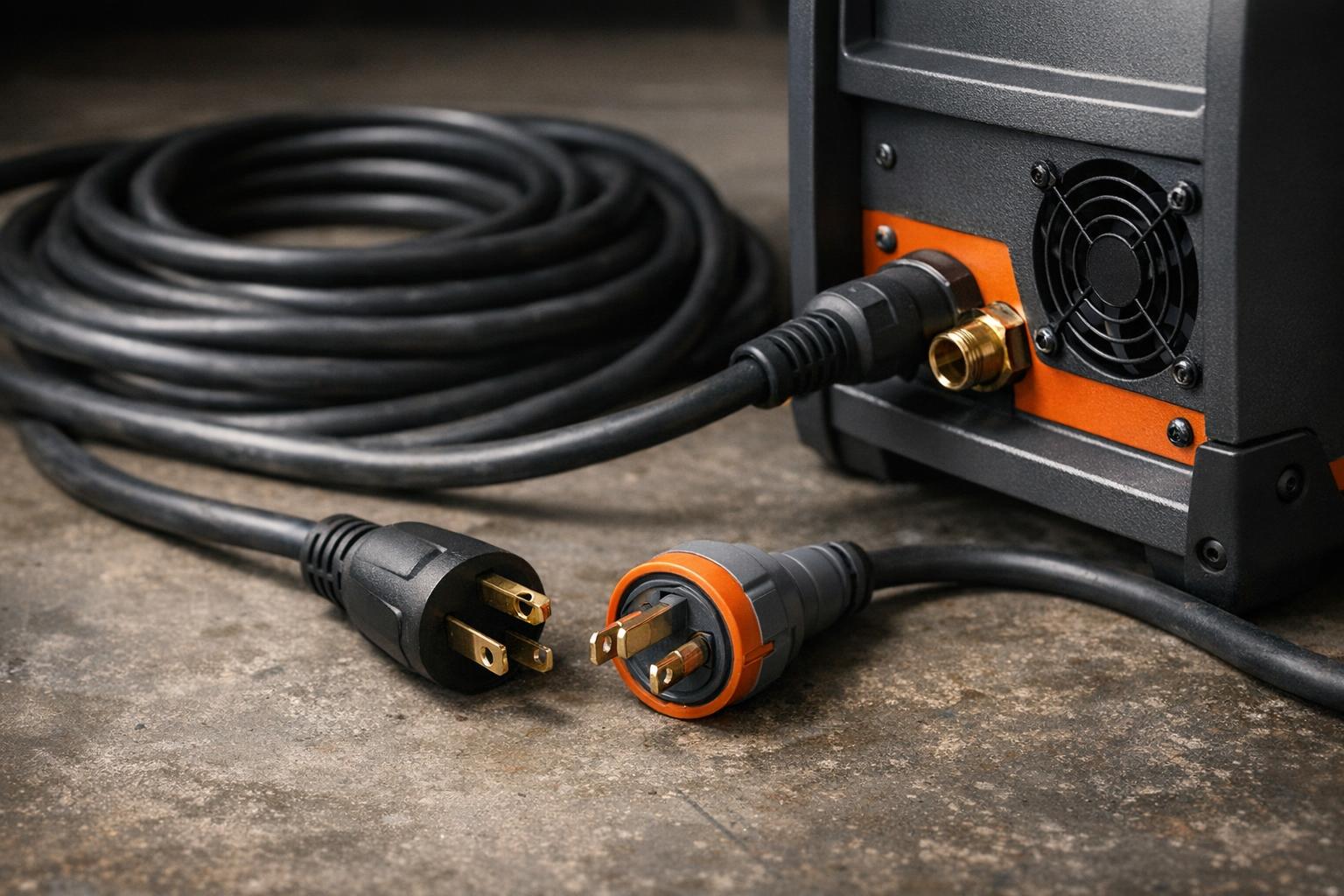
A 140 A class wire welder is built around the standard home circuit. Hobart's spec sheet for the Handler 140 says it runs on standard 115/120 V, 20 A home circuits and draws 20 A at rated output. That is the whole circuit, so anything else on it (a compressor, a heater, the garage lights on the same breaker) can trip it.
Before you buy, look at your breaker panel: which breaker feeds the outlet you would use, is it 15 or 20 A, and what else runs on it. Those three answers decide more than the badge on the welder.
What a 240 V input involves
A 240 V welder needs a 240 V receptacle that matches its plug, on a circuit sized to the input current in the manual. That is work for a licensed electrician, and the manual is the document that states the plug type and the breaker or fuse size, not the listing. Miller puts it plainly in its TIG setup guide: make sure the power supply matches the rating label, and you may need to buy a plug that matches your receptacle.
Outside North America the numbers change: European machines run on 230 V and Fronius specifies a 16 A slow-blow fuse for its 230 V model. If you buy a listing written for another market, check the voltage on the rating label.
Reading "dual voltage" in a listing
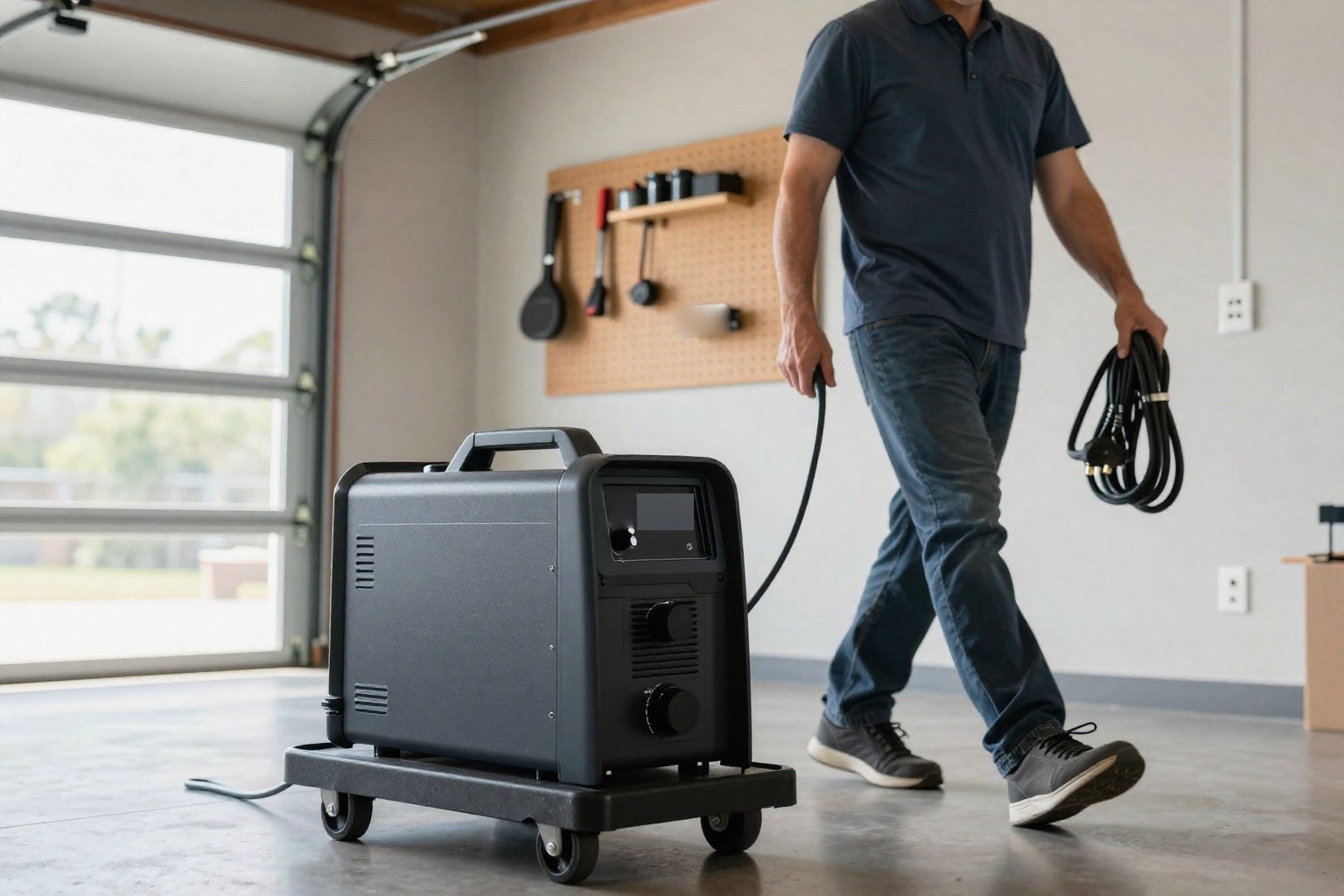
- Two plugs or an adapter: the listing should say how you change input. Miller ships MVP adapter plugs for 120 V and 240 V; many listings do not say.
- Output on each input: a single maximum amperage is almost always the 240 V figure. Look for the 120 V value separately.
- Duty cycle on each input: it changes with voltage and amperage; see our duty cycle guide.
- "Automatic voltage detection": it means the machine adapts to the voltage it is plugged into, not that your circuit can carry the current.
- 110 V vs 120 V, 220 V vs 230 V vs 240 V: listings use these numbers loosely for the same two household supplies.
Which should you buy, and which of our welders fits which outlet
If you weld sheet metal, exhaust, brackets and small repairs up to about 1/8 inch, a 120 V machine on a free 20 A circuit is enough. If you plan trailers, plate or aluminum, plan for 240 V: Miller recommends a 230 V capable welder for MIG on aluminum, because 115 V machines usually lack the energy to break through the oxide layer. A dual-voltage machine is the safe choice when you are not sure yet, since you can start on 120 V and add the 240 V circuit later.
- 120 V only, simplest start: YESWELDER 135A 3-in-1 MIG Welder (rated 9.4/10) is listed at 110 V with flux-core MIG, lift TIG and stick. Good on a free household circuit for thin steel.
- Dual voltage, room to grow: YESWELDER 160A MIG Welder (8.7/10) and YESWELDER 205A 5-in-1 MIG Welder (8.7/10) are both listed as 110V/220V; the 205A model adds a spool gun mode for aluminum.
- Dual-voltage MIG from a big brand: Lincoln Electric Power MIG 211i (9.2/10), listed at 120/230 V with a 20-211 A output range.
- Aluminum TIG on either supply: Weldpro 200A AC/DC Pulse TIG Welder (9.4/10) is listed as 110V/220V dual voltage AC/DC TIG with a foot pedal.
See all of them in our multiprocess welder ranking and the portable multiprocess ranking.
Our rated picks
The three best-rated models of our best multiprocess welders ranking, from the buyer review record and the listed specs.
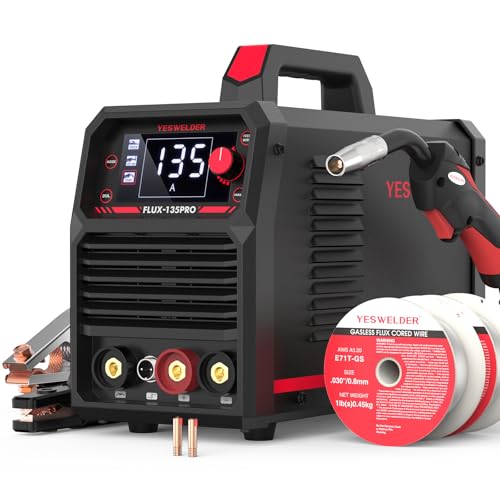


Product images: Amazon listings
Frequently asked questions
Is a 110V welder good enough?
For sheet metal and steel up to about 1/8 inch, yes. Miller rates its dual-voltage MIG welder for 3/16 inch steel on 120 V versus 3/8 inch on 240 V, so thick plate and aluminum MIG call for 240 V.
Can I plug a 220V welder into a 110V outlet?
Only if the manual says it is dual voltage and you use the plug or adapter it specifies. A 240 V-only machine is not built for a 120 V outlet.
What size breaker does a welder need?
The manual states it. As examples, Hobart builds its Handler 140 for a standard 20 A, 120 V home circuit, and Fronius specifies a 16 A slow-blow fuse for its 230 V TIG inverter; a 240 V MIG welder usually needs a dedicated circuit installed by an electrician.
What is a dual voltage welder?
A welder that runs on both 120 V and 240 V input, usually by swapping a plug or adapter. It gives more output on 240 V and lets you weld on a normal outlet when that is all you have.
Sources
- Miller Electric — Millermatic 211 PRO: specifications (consulted Nov 2026)
- Miller Electric — Buying Your First Welder: A Practical, Informative Guide for Do-It-Yourselfers (consulted Nov 2026)
- Hobart Welding Products (spec sheet, dealer-hosted PDF) — Handler 140 specification sheet (consulted Nov 2026)
- Fronius — Ignis 150/180 TIG operating instructions (consulted Nov 2026)
- Miller Electric — Guide to TIG Welding Basics (consulted Nov 2026)
- Miller Electric — MIG Aluminum DIY: Selecting the Right Welder, Spool Gun and Filler Wire (consulted Nov 2026)